
Last updated November 2, 2026
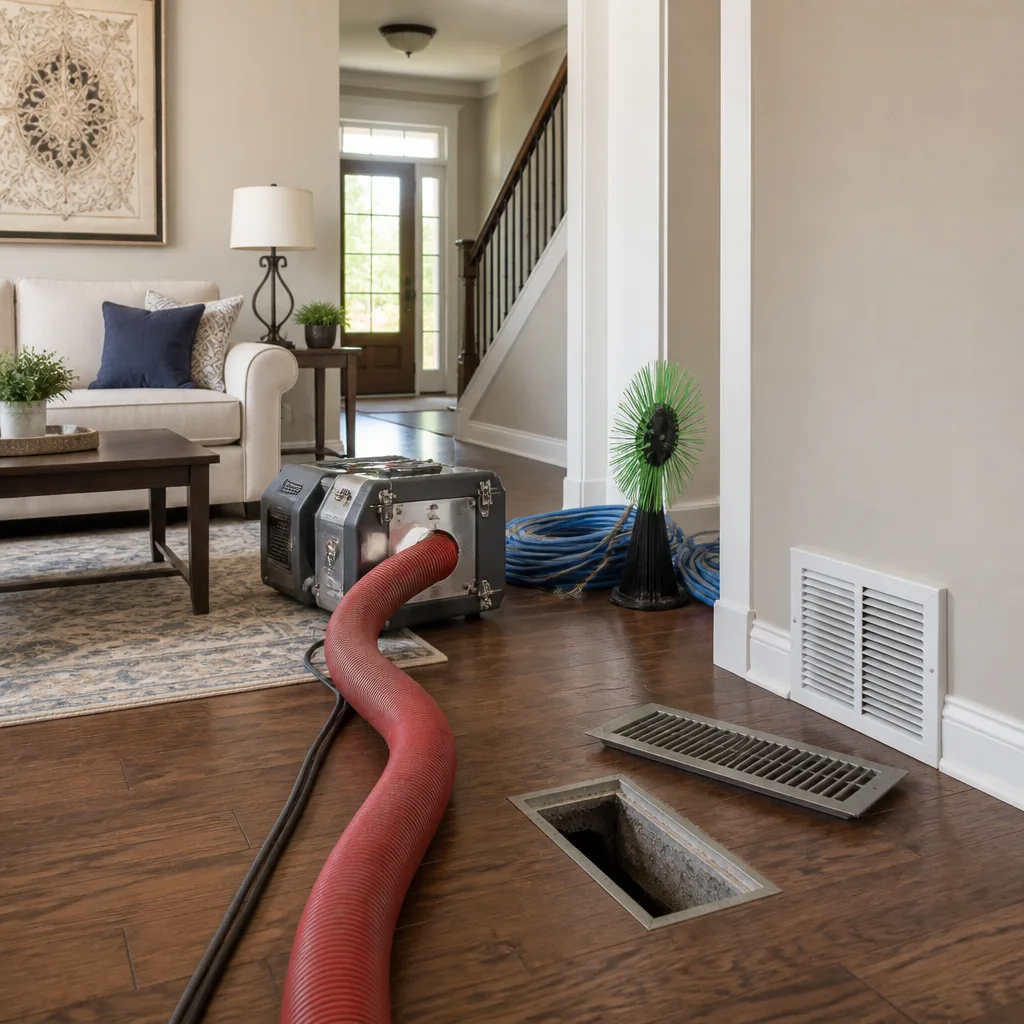 Whole-home duct cleaning
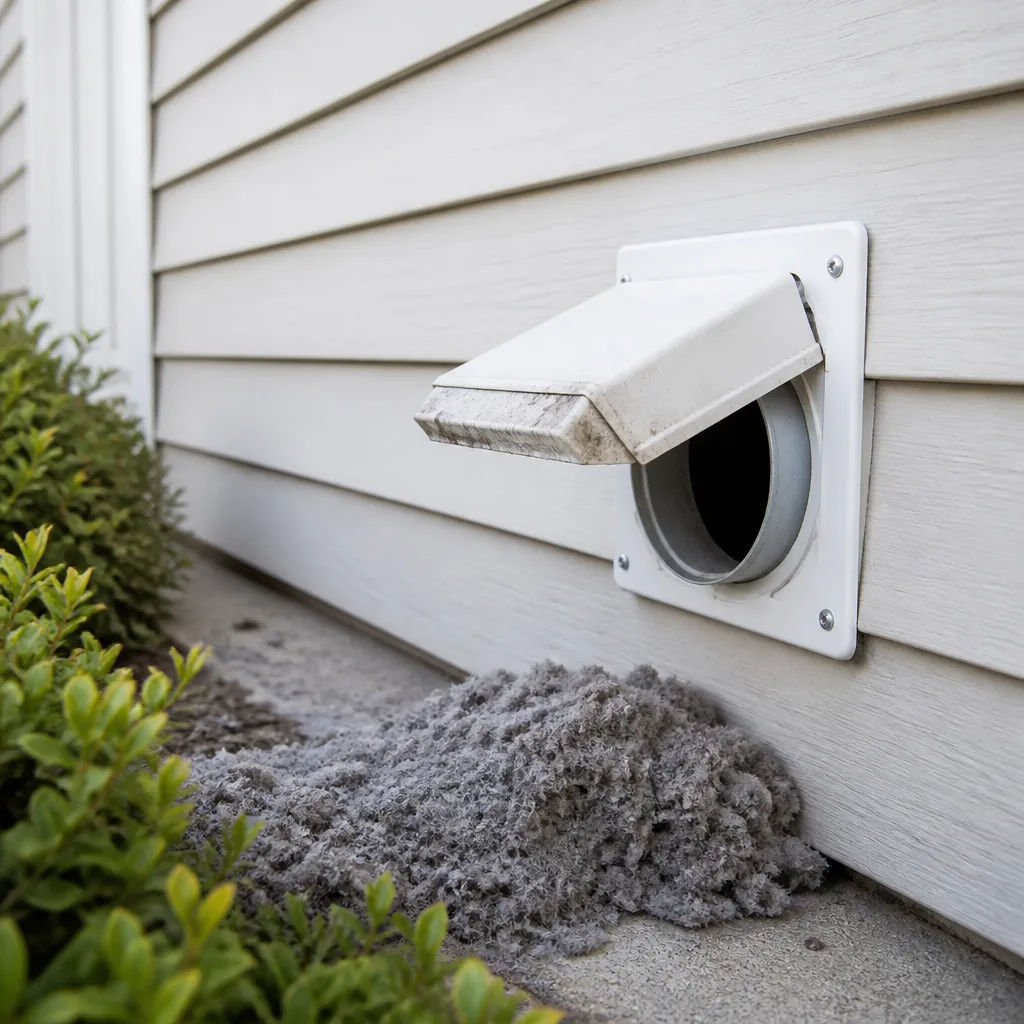 Dryer vent cleaning
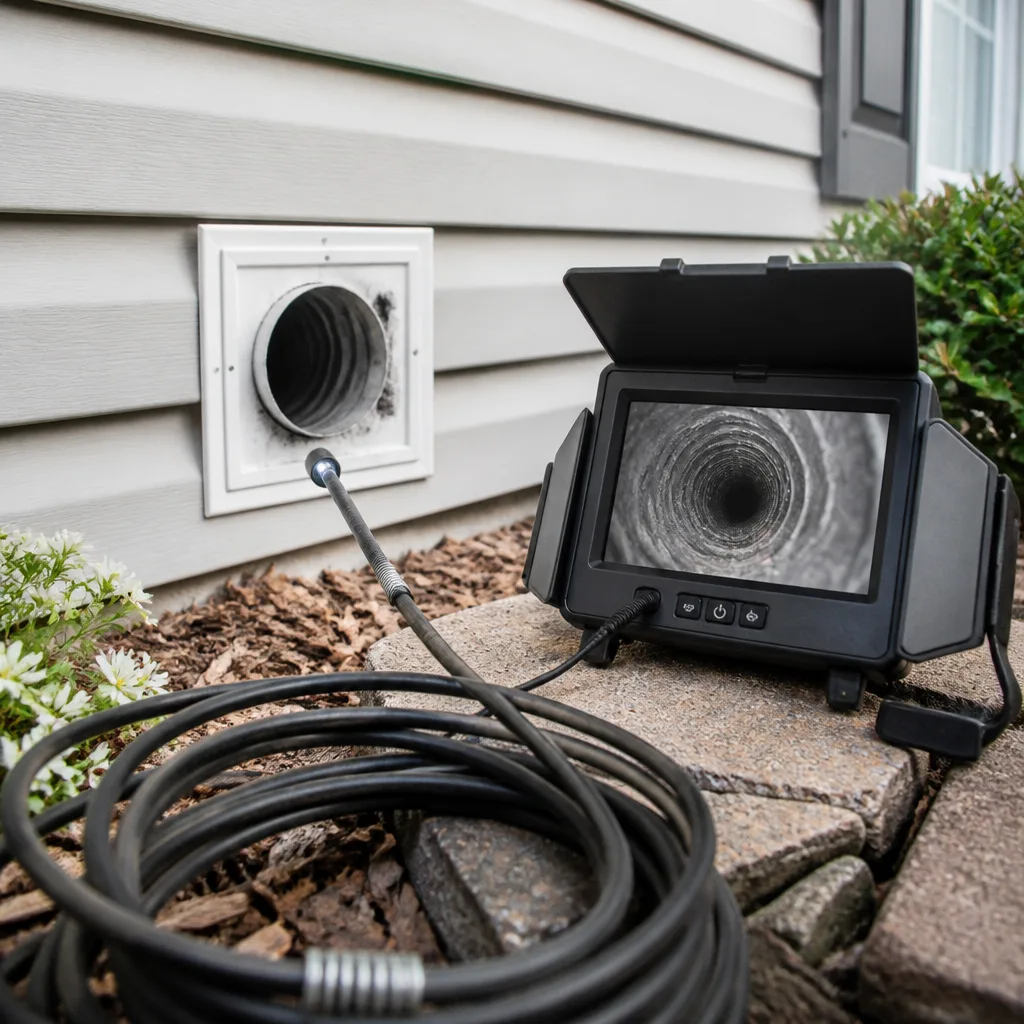 Camera inspection
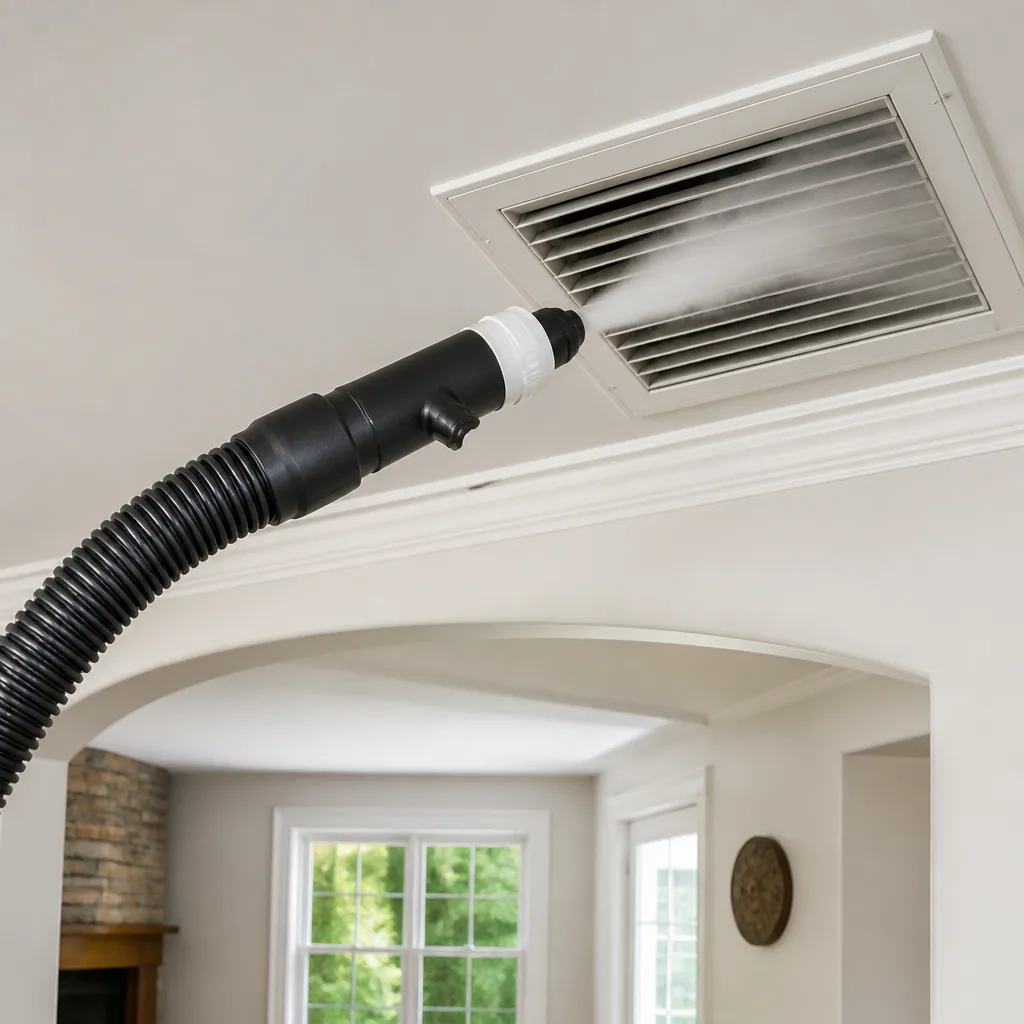 Sanitizing & deodorizing
Whole-system duct and dryer vent check with before-and-after photos - you see exactly what came out of your vents
That "$99 whole-house special" is a bait ad - the real number appears once they are in your hallway, or the "clean" is a shop-vac at the register. We photograph the inside of your ducts before and after instead.
DIY vs Professional Air Duct Cleaning: The Valley Hi Homeowner’s Decision Guide
Here’s a number that surprises most Valley Hi homeowners when we walk them through it: a typical single-family home in this area has between 150 and 250 linear feet of ductwork running through walls, attic spaces, and subfloor cavities. The average handheld vacuum, even a good one, has a hose reach of about 4 feet and suction that drops off dramatically past 18 inches inside a tight duct. So the real question isn’t whether you can clean your own ducts. It’s whether cleaning the first 12 inches of a 200-foot system actually does anything for the air you breathe. This guide walks you through exactly what DIY can and cannot accomplish, where the line sits, and how to decide when professional equipment is genuinely necessary. We’ll get specific about Valley Hi conditions, equipment physics, and the scenarios where a homeowner’s best intentions create a bigger problem than they solve.
Styles & brands we work with
- Whole-home duct cleaning
- Dryer vent cleaning
- Camera inspection
- Sanitizing & deodorizing
Quick Answer
DIY duct cleaning in Valley Hi can genuinely help with register cleaning, return grille maintenance, and inspecting visible flex duct, but it cannot replicate the negative-pressure containment and brush-agitation systems used by professional contractors. Consumer vacuums lack the CFM (cubic feet per minute) airflow needed to pull debris from the full duct run, and in some configurations DIY attempts dislodge accumulated dust into living spaces rather than removing it. If your ducts haven’t been professionally cleaned in 5+ years, you have pets, or you’ve done recent renovations, professional service is the honest answer; if you’re maintaining clean ducts and replacing filters diligently, DIY upkeep between professional cleanings is reasonable.
Table of Contents
- What DIY Can Actually Accomplish (The Honest Scope)
- Why Consumer Equipment Fails at the Core Task
- When DIY Makes Things Worse: The Problem Scenarios
- How Professional Systems Work: The Mechanical Difference
- Valley Hi-Specific Factors That Change the Equation
- The Decision Framework: Professional vs. Optional
- The Cost Reality: What You’re Actually Paying For
- Common Mistakes to Avoid
- When to Call a Professional
- Frequently Asked Questions
- The Bottom Line
What DIY Can Actually Accomplish (The Honest Scope)
Let’s start with what’s legitimate. There are real maintenance tasks a Valley Hi homeowner can and should do themselves, and doing them well extends the life of your duct system between professional cleanings. We’re not here to tell you that everything requires a truck-mounted unit and a four-person crew. That’s not true, and pretending otherwise is how this industry earned its reputation.
Register and Grille Cleaning
Every supply register and return grille in your home can be removed, washed, and reinstalled by a homeowner in about 15 minutes per unit. This matters more than most people realize. The register is the narrowest point in the airflow path, and in Valley Hi homes we regularly see registers coated with a gray film of dust and pet hair that’s visibly restricting the opening. Cleaning them with warm water and a mild detergent, then drying thoroughly before reinstalling, restores airflow immediately. This is genuinely useful work, and no professional equipment is required.
Return Grille Filter Maintenance
The filter at your return grille is the first line of defense for your entire system, and it’s your job, not ours. We recommend checking it monthly in Valley Hi, where the combination of Central Valley dust and seasonal pollen loads means filters load faster than the 90-day replacement schedule printed on the box. A loaded filter forces your blower to work harder, which means more dust gets pulled through the bypass gaps and into your ducts. This is one of the highest-leverage things you can do, and it costs you about $15 and five minutes.
Visible Flex Duct Inspection
In many Valley Hi homes, particularly those built in the 1980s through early 2000s, a portion of the flex duct is visible in the garage or attic access point. If you can see it, you can inspect it. Look for sagging sections, crushed areas where something’s been set on top of the duct, and tears in the outer jacket. You’re not fixing these yourself, but identifying them early and calling for air duct repair in Valley Hi before a small tear becomes a disconnected run saves real money. What you’re looking for is obvious damage, not subtle degradation. That comes later.
- Turn off your HVAC system at the thermostat before removing any registers or grilles.
- Unscrew each register (typically two screws) and wash with warm soapy water; dry fully before reinstalling.
- Check the return grille filter monthly; replace when visibly gray, even if the package says 90 days.
- Inspect any visible flex duct in garage or attic for sagging, crushing, or tears; mark issues and schedule repair rather than attempting a fix.
- Keep the area around return grilles clear of furniture, boxes, and stored items so airflow isn’t restricted.
That’s the honest DIY list. What’s not on it is anything that requires reaching more than a few feet into the duct, and that’s not a judgment on your capability. It’s a matter of physics, which is where most guides go vague.
Why Consumer Equipment Fails at the Core Task
The core job of duct cleaning is to remove the debris that has settled along the full interior surface of the duct system. Not just the first bend, not just what you can see from the register. The entire run. And the specific failure of consumer equipment is airflow, measured in CFM, or cubic feet per minute. This is the number that matters, and it’s the number no shop vac box prints prominently.
A high-quality consumer shop vac in the 5-6 horsepower range typically produces between 100 and 185 CFM at the hose end. A professional duct cleaning system, which is the category that includes the air duct cleaning equipment we run, produces airflow in the range of 2,000+ CFM at the point of contact. That’s not a small difference in suction. That’s an order-of-magnitude difference in the ability to suspend particulate, carry it through a 25-foot hose run, and deposit it in a collection chamber outside the living space.
Here’s the physics in plain terms: dust that has settled in a duct for five years isn’t light powder sitting loose on the bottom. It’s a matted layer of fine particulates, pet dander, and fibers that has been compacted by thousands of hours of airflow pressing it against the duct wall. To lift that mat requires enough airflow velocity to overcome the forces holding it in place, and then enough sustained CFM to carry the dislodged material the full length of the hose rather than letting it resettle 8 feet later. A consumer vacuum manages the first part partially and fails the second entirely.
We’ve seen it in Valley Hi homes more times than we can count: a homeowner spends a weekend running a shop vac hose into every register they can reach, and they pull out enough gray dust to feel like the job’s been done. Then we come in with negative-pressure equipment and pull another 8 to 12 pounds of material out of the same system. The homeowner didn’t do anything wrong. Their tools simply couldn’t do the job, because the job requires sustained airflow a consumer machine can’t produce.
When DIY Makes Things Worse: The Problem Scenarios
This is the section most guides omit, and it’s the one that matters most for Valley Hi homeowners with older homes. Because the inconvenient truth is that some DIY attempts don’t leave your ducts the same as they found them. They make things worse, and in specific ways we can predict from duct material and house age. For genuinely dangerous components like high-tension garage-door springs or electrical panels, the safety advice is obvious. For ductwork, the danger is subtler but real: you can dislodge material into your living space without knowing it.
Older Flex Duct Tears
Flex duct is a spiral wire coil wrapped in insulation and a foil or plastic outer jacket. It has a lifespan, and in the Sacramento Valley climate, that lifespan is shorter than the manufacturers suggest. Heat in attics here regularly hits 130 to 150 degrees in summer, and that thermal cycling degrades the plastic jacket over 15 to 20 years. If your Valley Hi home was built before 2005 and still has original ductwork, the flex is likely brittle to some degree. Running a brush or even a stiff vacuum hose into brittle flex can tear the inner liner or crack the outer jacket. Once that happens, conditioned air leaks into your attic, and your system works harder to cool less. The repair isn’t a DIY fix, and it costs more than the cleaning would have.
Debris Dislodged into Living Space
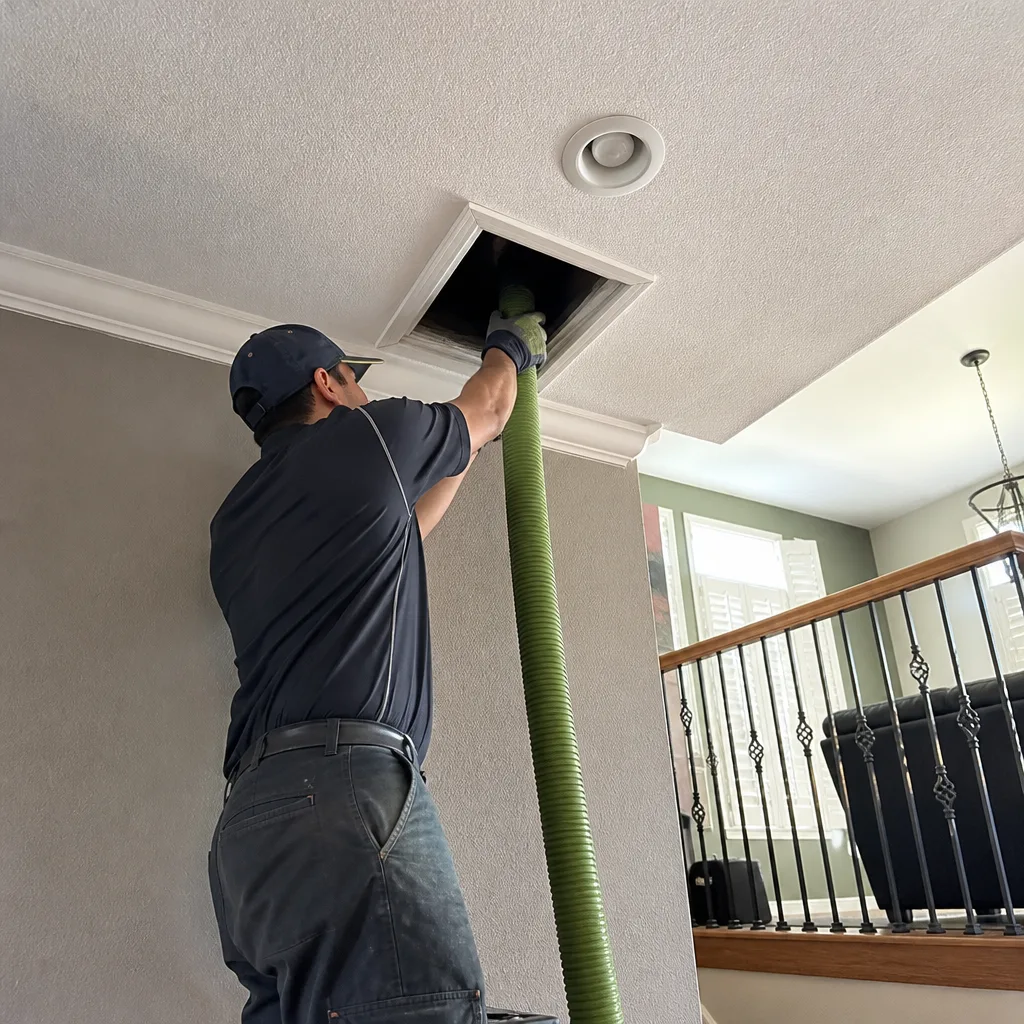
Without negative-pressure containment, any debris you knock loose inside a duct has exactly two places to go: further down the duct into your home, or out through whatever access point you’re working from. When a technician uses professional negative-air equipment, the entire duct run is under negative pressure from the collection unit, so dislodged material is pulled continuously toward the vacuum source and captured before it enters living space. When you run a consumer vac through a register, the pressure profile is entirely different. The hose creates localized suction at the tip, but the rest of the duct remains at neutral or slightly positive pressure from your HVAC system. Material dislodged beyond the immediate reach of the hose tip resettles further down the run, and the next time the blower kicks on, that freshly loosened material gets distributed through your living room. This is not an edge case. It’s the normal outcome of non-contained duct agitation.
Disturbing Suspicious Material Without Containment
If you open a register and see dark staining, visible mold-like growth, or a musty smell, stop. Do not agitate it. In Valley Hi, where summer humidity is low but cooling coil condensation creates localized moisture inside ductwork, mold growth in the first few feet of duct after the air handler is not rare. Disturbing mold without containment spreads spores through the home. The professional response involves containment protocols, which is why Abatement Technologies gear exists as a category. The equipment is designed for exactly this scenario, keeping what’s disturbed from recirculating through living space. The homeowner response is to close the register and call someone who runs this kind of setup.
How Professional Systems Work: The Mechanical Difference
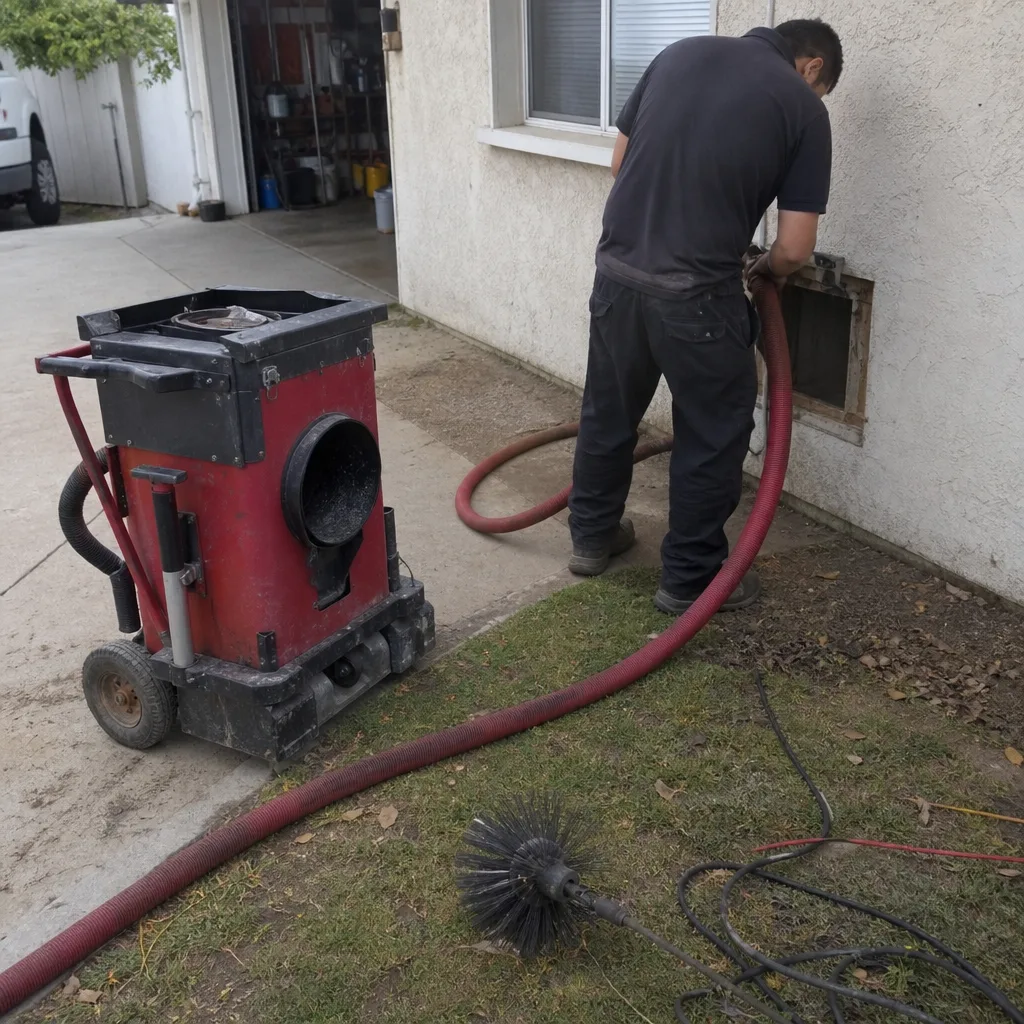
The equipment brands that serious indoor-air-quality contractors specify, including the systems we use for air duct cleaning in Valley Hi, separate into three functional categories. Understanding what each does mechanically is what allows you to evaluate any contractor you’re considering, not just us.
Rotary Brush Agitation Systems
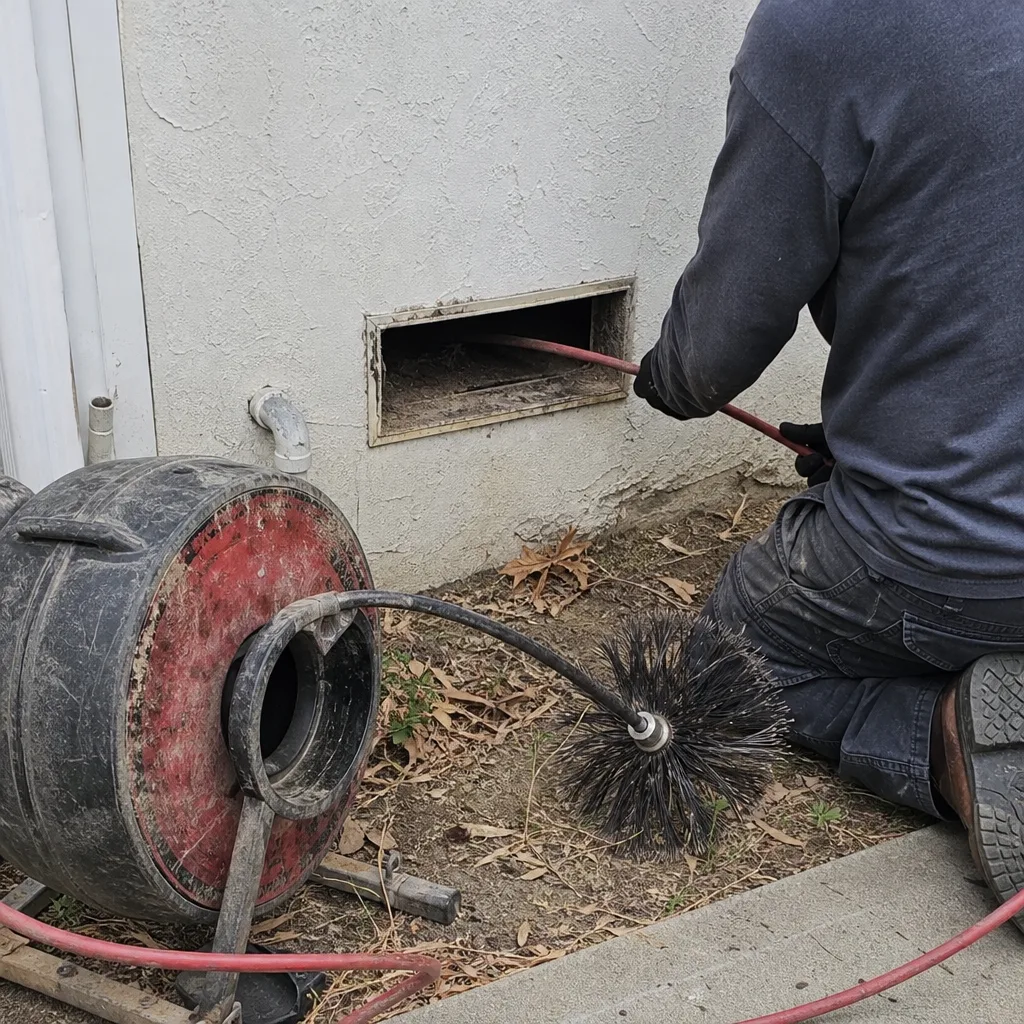
Rotobrush is the brand most homeowners have seen, representing a category of rotary brush systems that do the mechanical scrubbing a vacuum alone cannot. A rotating brush head, sized to the duct dimensions, spins at high speed against the duct walls, mechanically breaking up that matted debris layer described earlier. The brush is what makes the debris available for removal. Without agitation, high CFM airflow alone removes loose surface dust but leaves the compacted layer in place.
Negative Air and Containment Systems
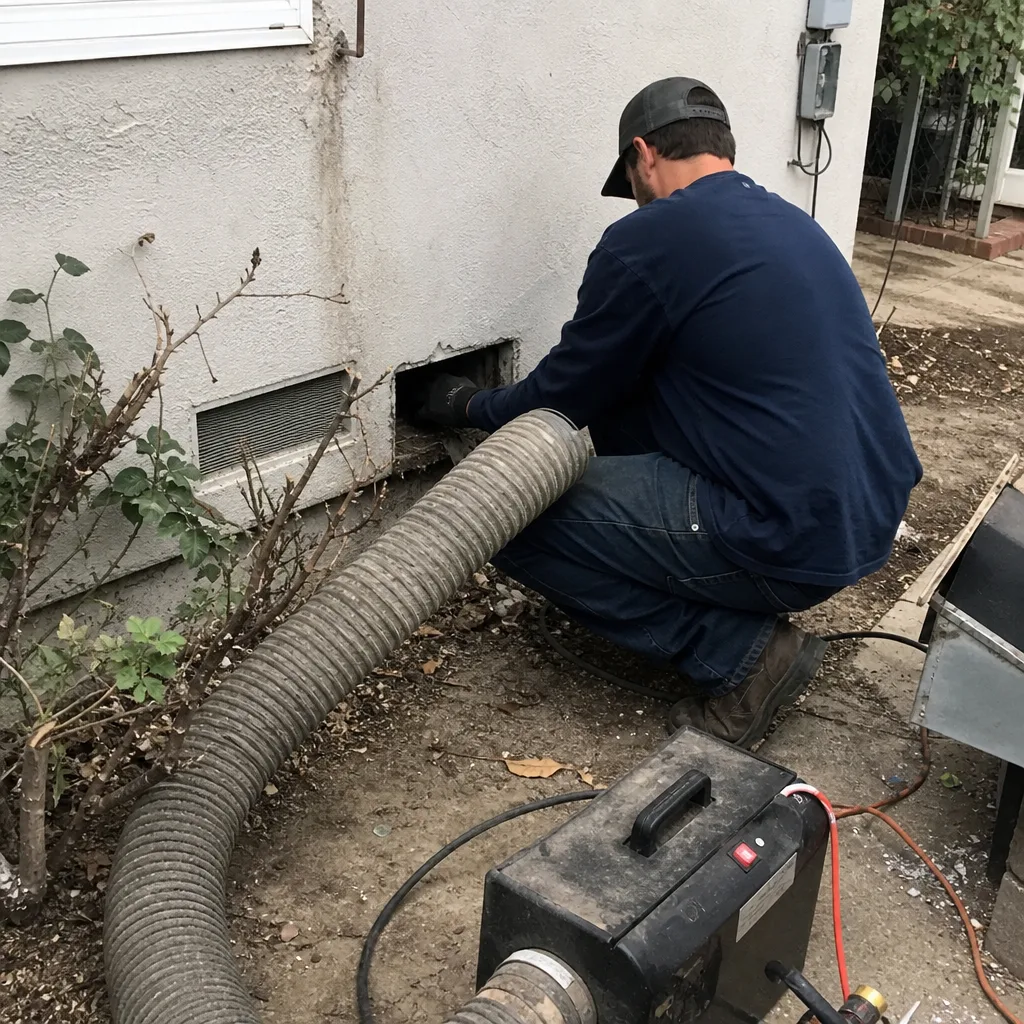
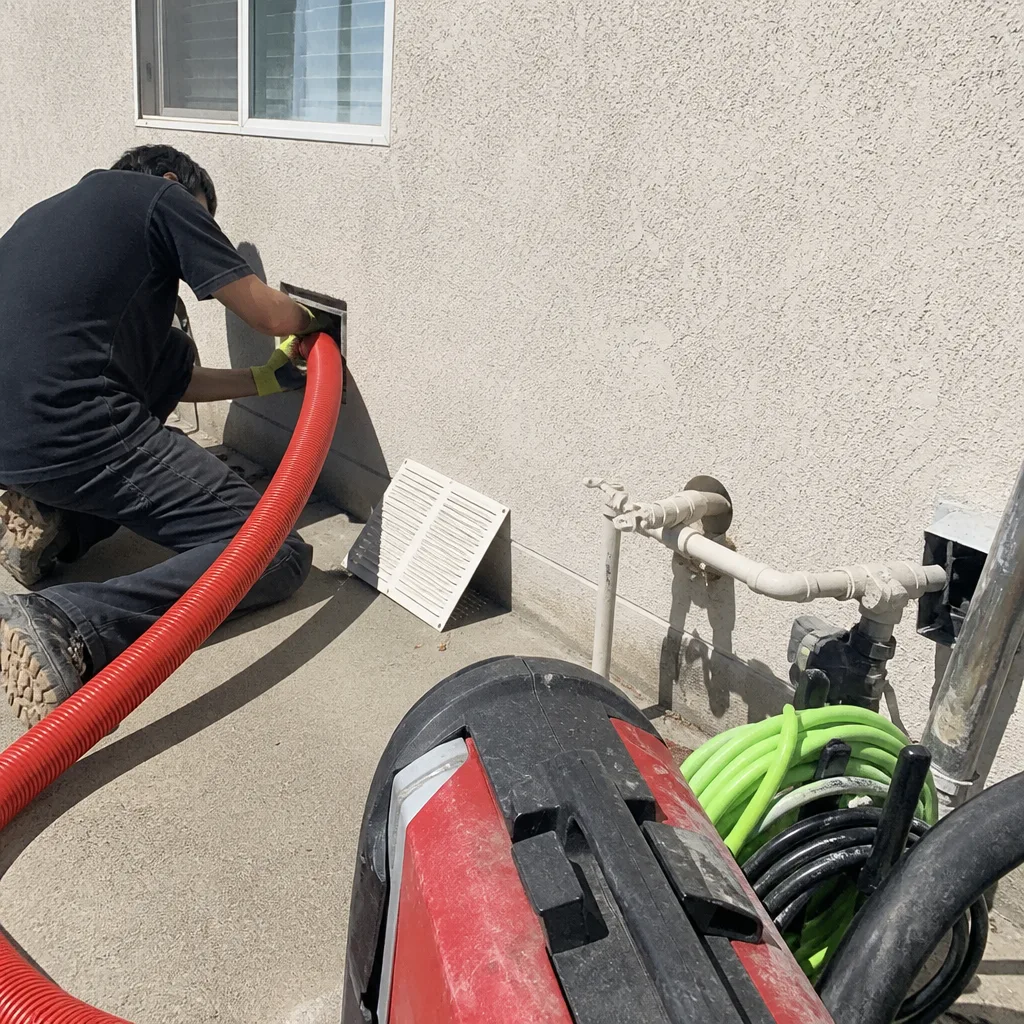
Nikro and Abatement Technologies represent the negative-air and containment category. These are purpose-built units that create continuous negative pressure inside the duct system during the entire cleaning process. The collection unit connects to the duct run, and the pressure differential means air flows from the living space into the duct and straight into the collection chamber, never the reverse. This is the mechanical feature that prevents dislodged material from entering the home, and it’s the specific difference no consumer tool replicates.
Inspection Capabilities
Professional duct cleaning in Valley Hi includes inspection as a standard step, not an upsell. The camera goes into the duct before and after, showing you what’s actually there. Before-and-after photos of your own ducts aren’t a gimmick. They’re the documentation that the job was actually done, which matters in an industry where a poor first experience with a fly-by-night operation is the reason many homeowners are skeptical in the first place.
Valley Hi-Specific Factors That Change the Equation
Valley Hi isn’t a generic climate. It sits in the Sacramento Valley, and our conditions change the math on duct cleaning in specific, predictable ways. If you’re reading this from a guide written for a national audience, it’s probably missing these factors entirely.
Three things matter here. First, the Central Valley wind patterns carry fine particulates year-round, which means outdoor dust ingress is constant, not seasonal. Your ducts accumulate material at a higher baseline rate than a coastal California home. Second, our summer attic temperatures degrade flex duct faster than in milder climates, which means more homes are running deteriorated ductwork that needs repair, not just cleaning. Third, the allergy season here is extended and multi-wave, with tree pollen in spring, grass pollen through early summer, and weed pollen into fall. More allergen load in the air means more allergen load in the ducts.
We also see a specific pattern in Valley Hi homes built between 1990 and 2010: builder-grade flex duct, often installed with tight bends that restrict airflow from day one. In these homes, even professionally cleaned ducts can underperform because the duct design itself is compromised. Air duct repair in Valley Hi often addresses the restriction that cleaning alone can’t fix.
The Decision Framework: Professional vs. Optional
Here’s the honest framework we use when a Valley Hi homeowner asks whether professional cleaning is needed. It’s not always yes, and any contractor who says otherwise is selling, not advising.
Professional Cleaning Is the Right Call When:
- Your ducts haven’t been cleaned in 5+ years. If you don’t know when they were last done, assume they haven’t been. Five years of Sacramento Valley particulate accumulation is a legitimate cleaning job, not a maintenance touch-up.
- You have pets that shed. Pet dander is lighter than dust and stays suspended longer, meaning it travels further into the duct system and deposits throughout the full run. One or two indoor dogs or cats is enough to change the accumulation profile significantly.
- You’ve done recent renovations. Drywall dust, sawdust, and construction debris find their way into ductwork during any remodel, even if registers were covered. The fine particulate hangs in the air during construction and gets pulled into the return.
- You have smokers in the home or did previously. Smoke residue is sticky and binds dust to duct walls, creating a coating that required mechanical agitation plus airflow to remove. This is not a vacuum-job scenario.
- You can see debris at the register openings. If visible material is present at the accessible point, there’s more upstream. What you can see is the overflow, not the total.
- Your energy bills have crept up without explanation. Restricted airflow from accumulated buildup forces the system to run longer to hit the same temperature. It’s not the only cause of rising bills, but it’s a common one in Valley Hi homes with older ductwork.
DIY Maintenance Is Reasonable When:
- Your ducts were professionally cleaned within the last 3 years.
- You’re changing filters monthly and seeing normal gray color, not heavy matting.
- No pets, no smokers, no recent construction.
- You’re seeing light surface dust at registers, not thick accumulation.
- Your home is newer (post-2015) with properly installed, insulated flex duct.
The Cost Reality: What You’re Actually Paying For
Let’s talk about the cost question directly, because the $49 coupon ads have poisoned the conversation. In the Valley Hi market specifically, professional air duct cleaning for a typical 1,500-2,500 square foot home generally runs from about $350 to $800, depending on system complexity, number of returns, and the level of contamination present. That’s not a bait price. That’s the real range for a job done with appropriate equipment, containment, and before-and-after documentation.
What are you actually buying at that price? You’re buying the machinery. The negative-air units, the rotary brush systems, the containment gear. These are five-figure capital investments per truck, and they’re amortized across every job. A contractor running a consumer-grade vacuum out of the back of a pickup can charge $49 because his equipment cost $200. The job he does is physically incapable of matching what the equipment we run is mechanically designed to do.
You’re also paying for what doesn’t happen: debris not redistributed into your living space, flex duct not torn by improvised tools, and a system that’s inspected before and after so you know the work was done. We quote one flat price per system before work starts, agreed in advance. No per-vent pricing games. No bait-and-switch on arrival. The price we quote is the price you pay, and you see photos of your own ducts when we’re finished.
If you’re comparing quotes in Valley Hi, ask each contractor two questions: what CFM does your system produce at the hose end, and what containment protocol do you run. If they can’t answer either with a number and a brand name, you’re talking to a duct cleaning operation in name only. For reference, the equipment contractors in the professional category use, the Nikro and Abatement Technologies negative-air units and Rotobrush rotary systems we’ve discussed, are what those questions are designed to surface.
There’s also the repair question. When our inspection finds damaged duct, which happens in maybe 30 percent of older Valley Hi homes, cleaning alone isn’t the full answer. You need air duct repair in Valley Hi to address the damage before cleaning makes sense. A contractor who cleans a torn duct and calls the job done has sold you half a service. The flat-price model handles this honestly: if repair is needed, that’s quoted separately, and you decide with full information.
Common Mistakes to Avoid
- Using a leaf blower on ducts. We shouldn’t have to say this, but it happens. A leaf blower produces high velocity and zero containment, blowing dislodged material into every room and leaving the duct interior worse than it started. This is the single most damaging DIY “method” we see in Valley Hi.
- Buying “duct cleaning” kits sold online. The brush-and-rod kits marketed to homeowners break apart inside ducts, and the rod sections separate at the joints, leaving plastic fragments in your system. We’ve retrieved these from Valley Hi ducts on multiple occasions.
- Covering registers during DIY efforts without disabling the blower. Closing registers changes the static pressure in the system and can strain the blower motor, particularly in older units. If you’re doing register-level work, turn the system off at the thermostat first.
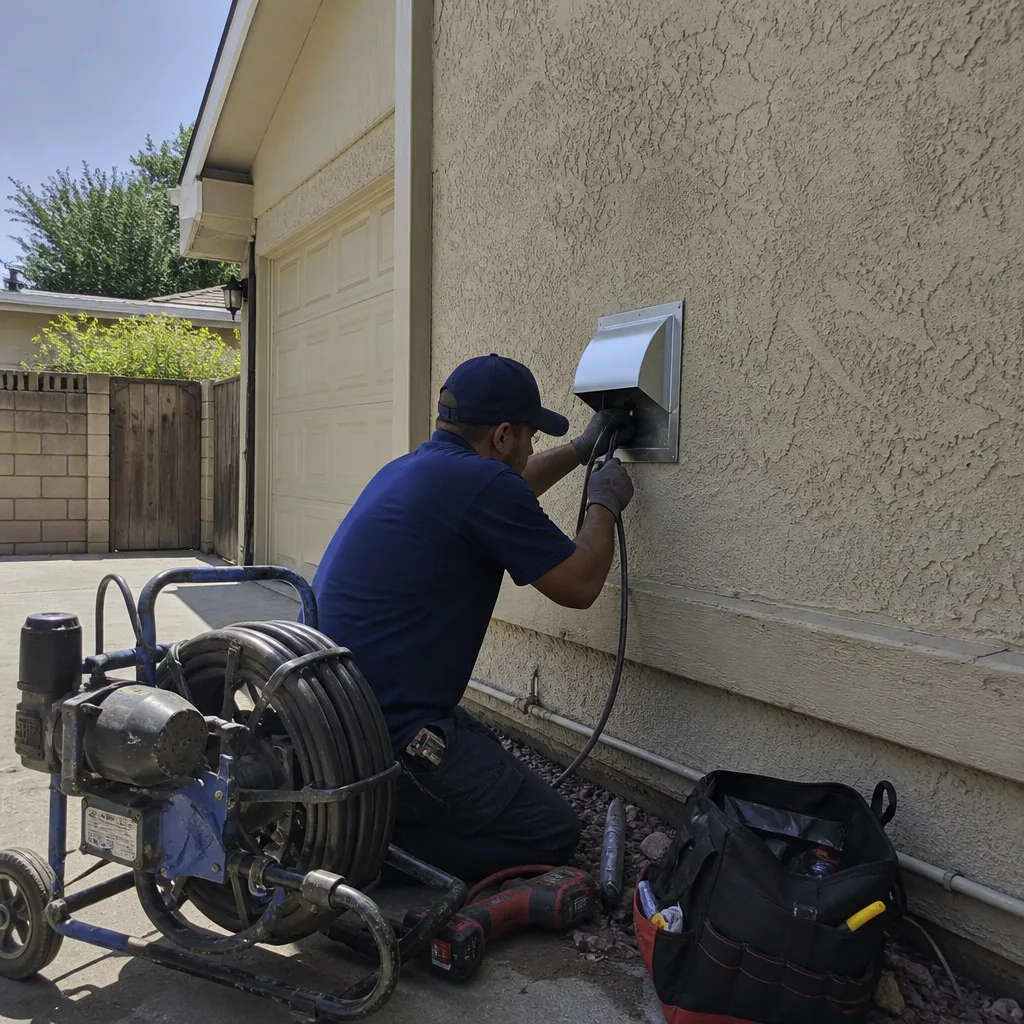
- Ignoring dryer vents while cleaning ducts. Lint is a different material than duct dust, and dryer vent cleaning in Valley Hi is a fire-prevention service, not a comfort service. It requires different tools and a different standard. Doing the duct clean but not the dryer vent clean is leaving the most dangerous part undone.
- Assuming new filters mean clean ducts. A new filter at the return grille does nothing for the material already accumulated downstream in the duct run. It prevents new material from entering, which is valuable, but it’s not cleaning.
- Trusting the lowest quote without asking about equipment and containment. In the duct cleaning market specifically, price and equipment quality are inversely correlated below a certain floor. Below about $300 for a whole-home job in Valley Hi, the math on equipment amortization doesn’t work for anyone doing it properly. You’re not getting a deal. You’re getting a different service.
When to Call a Professional
If you’ve read this far and you’re still uncertain, here’s the threshold, stated plainly: if your ducts have accumulated enough material that you’re considering cleaning them, they’ve accumulated enough material that consumer tools are the wrong tool for the job. The question isn’t whether professional cleaning is better. The question is whether it’s necessary yet, and the framework above is your answer. If your home checks three or more boxes in the professional-cleaning column, stop researching and start scheduling. Air Duct Cleaning Valley Hi offers free estimates in Valley Hi; call (833) 399-2759 and we’ll inspect your system, show you what’s actually in there, and give you a flat price for what’s needed. If the answer is that you don’t need cleaning yet, we’ll tell you that too.
Frequently Asked Questions
Professional air duct cleaning in Valley Hi typically runs between $350 and $800 for a standard single-family home, depending on system size, number of returns, and contamination level. That range reflects the cost of running professional-grade negative-air and rotary brush equipment, not a package price with per-vent upsells. Call (833) 399-2759 for an exact quote on your system; estimates are free and the price is agreed before work starts.
Cheaper quotes come from contractors running consumer-grade vacuums that cannot produce the CFM or containment required to clean a full duct system properly. The equipment on a professional truck costs five figures, and that’s amortized across every job. A $49 or $99 whole-home price in Valley Hi means the contractor is either using inadequate equipment, planning to upsell aggressively on arrival, or both.
Ask for before-and-after photos of your own ducts, taken with an inspection camera, showing the same sections before cleaning and after. If a contractor can’t or won’t provide this, you have no documentation that the work was performed beyond a receipt. The inspection camera is standard equipment on professional-grade jobs; it’s why the before-and-after visual is a standard deliverable, not an optional extra.
For most Valley Hi homes, professional cleaning every 5 to 7 years is the right interval if the home has no pets and no smokers. Homes with shedding pets, smokers, or recent renovations should consider a shorter interval of 3 to 5 years. The Central Valley’s year-round particulate load means ducts here accumulate faster than coastal California homes, and the 10-year national average you see in generic guides doesn’t apply to our conditions.
You can remove visible lint from the accessible end of a short dryer vent run with a consumer brush kit, but most Valley Hi homes have vent runs of 10 to 25 feet through walls or attics where lint accumulation is inaccessible without professional tools. Lint is a fire hazard, not a nuisance, and dryer vent cleaning is the one service in this category where skipping the professional is a documented safety risk rather than a comfort question.
Homes built in Valley Hi within the last few years generally don’t need full duct cleaning yet, but they often need an inspection. Builder-grade duct installation frequently leaves construction debris, sawdust, and drywall dust in the system that was there from day one. An inspection camera check is inexpensive insurance, and it tells you whether the system was clean from the start or whether you’ve been circulating construction debris since move-in. Call (833) 399-2759 to schedule an inspection.
Negative-air containment creates a continuous pressure differential that pulls dislodged debris toward the collection unit and out of the home, rather than letting it resettle further down the duct or escape into living space. Without it, any agitation you do inside a duct risks redistributing material through your registers the next time the blower runs. This is the specific mechanical feature, and it’s the difference between actual cleaning and moving dust around.
The Bottom Line
The DIY vs. professional question has a clearer answer than most guides admit. DIY duct work in Valley Hi is real and legitimate at the register, grille, and filter level. It fails at the 2-foot mark because consumer equipment lacks the CFM and containment to do the core task. Professional cleaning with negative-air and rotary brush systems is the only method that removes the full-run accumulation without redistributing it into your home. If your ducts were cleaned in the last few years, maintain them yourself. If you’re not sure, if you have pets, if you’ve renovated, or if you simply can’t remember the last time anyone looked inside, the honest move is an inspection with before-and-after documentation. That’s the service Air Duct Cleaning Valley Hi provides in Valley Hi, and the phone number is (833) 399-2759.
Written by the team at Air Duct Cleaning Valley Hi, serving Valley Hi since 2018.
See the difference
 Before
 After
 Before
 After
 Before
 After