
Last updated November 2, 2026
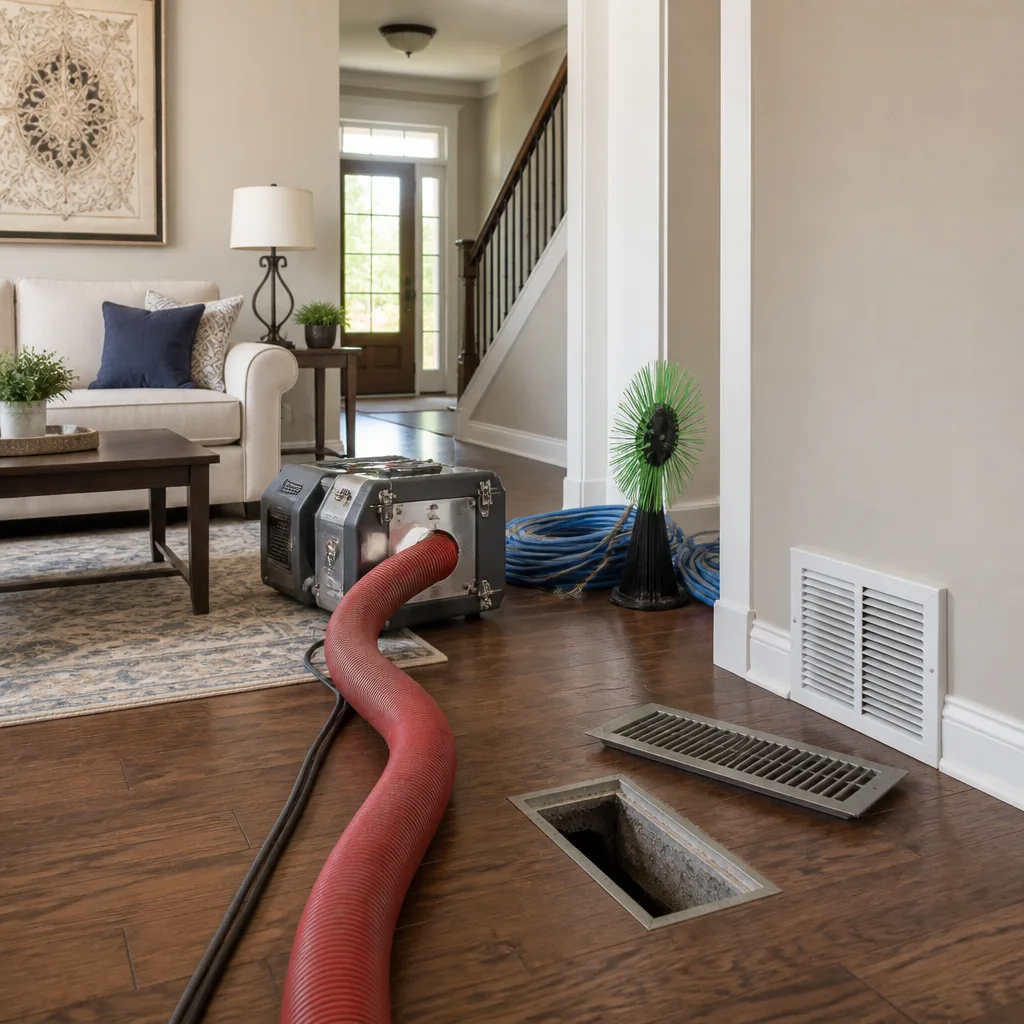 Whole-home duct cleaning
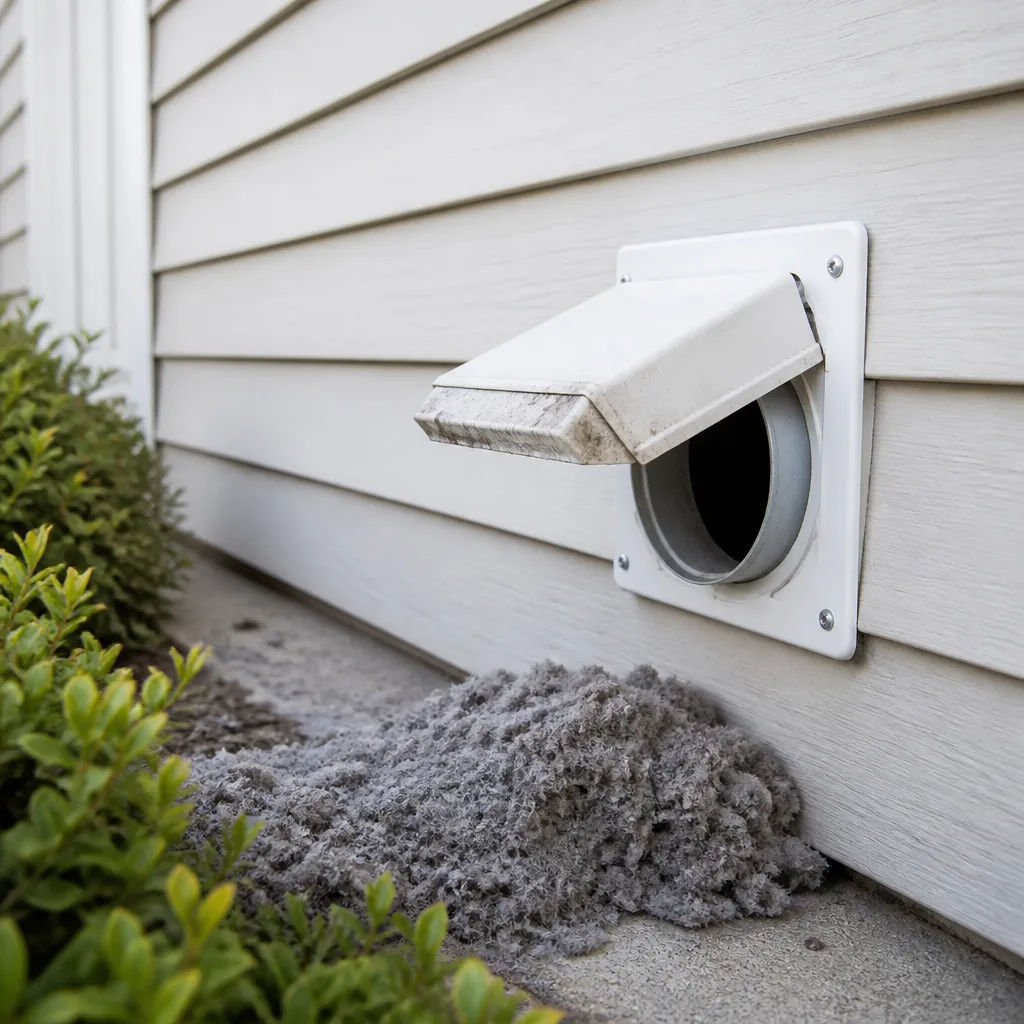 Dryer vent cleaning
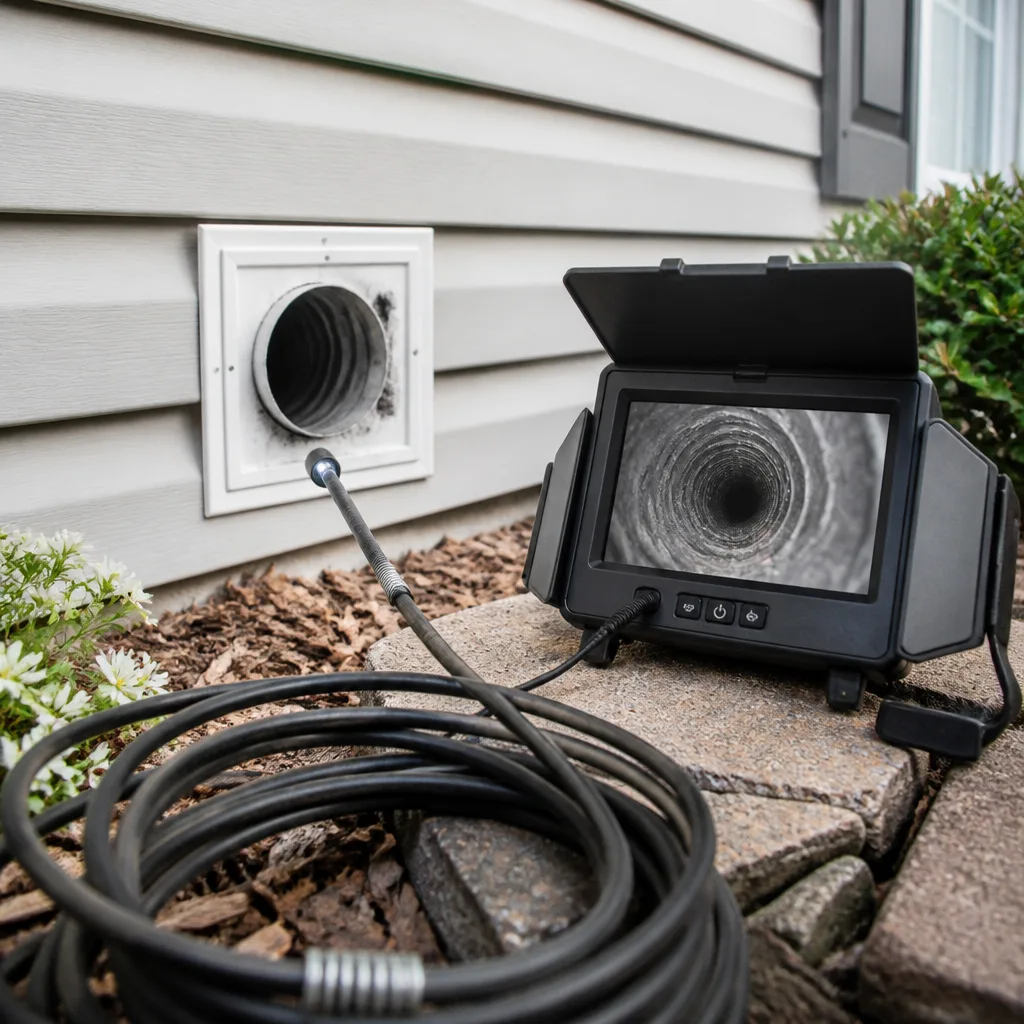 Camera inspection
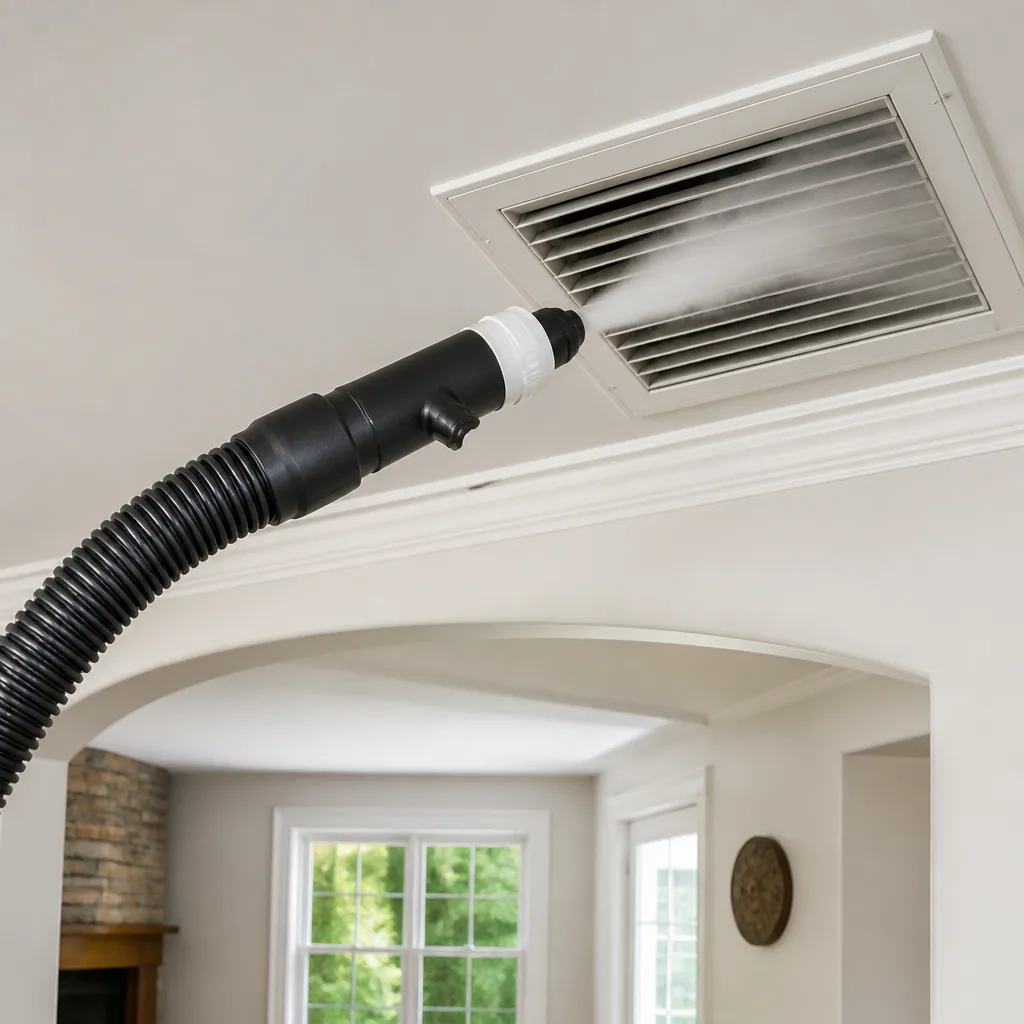 Sanitizing & deodorizing
Whole-system duct and dryer vent check with before-and-after photos - you see exactly what came out of your vents
That "$99 whole-house special" is a bait ad - the real number appears once they are in your hallway, or the "clean" is a shop-vac at the register. We photograph the inside of your ducts before and after instead.
Choosing the Right Air Duct Cleaning Brand: A Buyer’s Guide for Valley Hi
Here’s something most Valley Hi homeowners don’t realize: when you hire a duct cleaning company, you’re really hiring a machine. The technician operates it, but the Rotobrush, the Nikro negative-pressure unit, or the Abatement Technologies containment system is what actually does the work against the walls of your ductwork. A company can have the friendliest crew in Sacramento County, but if they show up with a shop vac and a drill attachment, your ducts aren’t getting cleaned. They’re getting stirred. This guide walks you through the professional equipment brands that separate legitimate duct cleaning from the $49 coupon special, how each system works, and what’s right for the specific duct layouts common in Valley Hi’s housing stock.
Styles & brands we work with
- Whole-home duct cleaning
- Dryer vent cleaning
- Camera inspection
- Sanitizing & deodorizing
Quick Answer
The right air duct cleaning brand depends on your duct type and condition. For rigid sheet metal ducts common in Valley Hi homes built between the 1960s and 1990s, Rotobrush rotary agitation systems paired with high-CFM vacuum extraction deliver the most thorough result. For heavy debris loads, post-construction cleanup, or flex duct systems that can’t handle aggressive brushing, Nikro negative-pressure systems with containment provide safer, equally effective cleaning. The equipment matters more than the company name on the invoice.
Table of Contents
- Why the Equipment Matters More Than the Company Name
- Rotobrush Systems: Rotary Agitation and When It’s the Right Call
- Nikro Systems: Negative Pressure and Containment for Heavy-Debris Jobs
- Abatement Technologies: Remediation-Grade Equipment for Serious Situations
- Matching Equipment to Your Duct Type: Rigid vs. Flex Duct
- Questions to Ask a Duct Cleaning Company Before You Book
- Red Flags That Signal the Wrong Equipment
- What DIY Duct Cleaning Can’t Do (And Why It’s Risky)
- Common Mistakes to Avoid
- When to Call a Professional
- Frequently Asked Questions
- The Bottom Line
Why the Equipment Matters More Than the Company Name
Walk through any Valley Hi neighborhood and you’ll see homes from three distinct building eras: the 1960s ranch-style houses with original sheet metal ducts, the 1980s and 1990s suburban builds with mixed rigid and flex duct, and newer infill construction with all-flex systems and tighter mechanical rooms. Each duct configuration responds differently to cleaning methods. A rotating brush that works beautifully on a rigid metal trunk line can shred a 30-year-old flex duct run in seconds. A high-CFM negative-pressure unit that handles post-construction dust effortlessly might struggle to dislodge caked-on debris without mechanical agitation. The brand of equipment a company uses tells you a lot about what they can actually do. Companies that work with professional-grade systems like Rotobrush, Nikro, and Abatement Technologies invest in equipment that costs anywhere from $7,000 to $25,000 per unit. The guy with the portable vacuum and a generic brush attachment spent $400. You can guess which one understands airflow dynamics.
In our experience cleaning and repairing ducts across Valley Hi, we’ve found that homeowners rarely know what equipment was used on their last cleaning. They remember the price and whether the tech was polite. But the equipment is the service. It determines whether debris gets loosened or just pushed around, whether dust recirculates into the living space during the job, and whether your duct interiors actually end up clean enough to make a difference in airflow and indoor air quality. This is why we use professional-grade Rotobrush and Nikro systems on every job, never consumer-grade vacuums with a logo slapped on the side.
Rotobrush Systems: Rotary Agitation and When It’s the Right Call
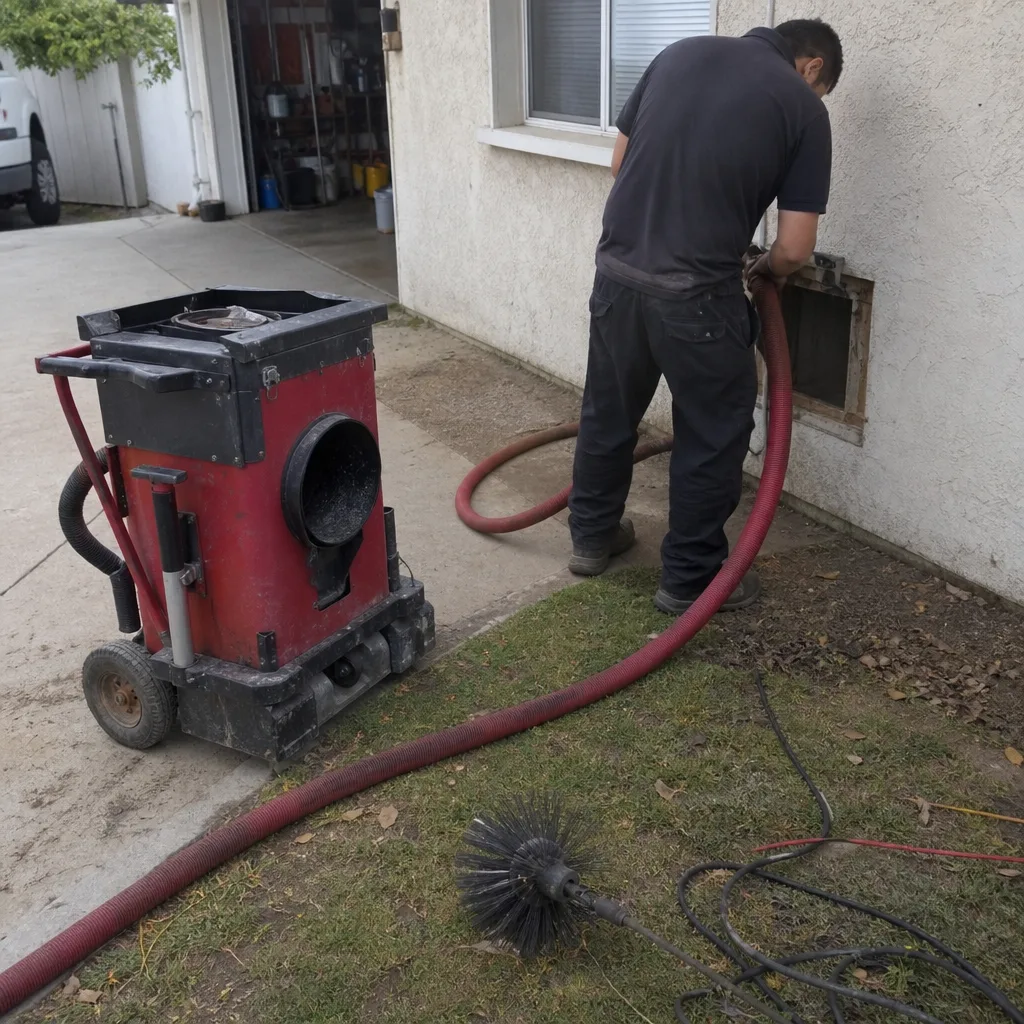
Rotobrush built its reputation on one simple principle: debris sticks to duct walls, so you need mechanical agitation to get it off. The system works by feeding a rotating brush head through the duct run while a paired vacuum pulls dislodged debris out simultaneously. The brush doesn’t just disturb surface dust. It scrubs against the metal interior, breaking loose the film of grease, pet hair, construction dust, and general household grime that has adhered over years of conditioned air passing through. That’s the difference between a duct that looks clean because the loose stuff got sucked out and a duct that’s actually clean because the adhered material got scrubbed off.
What Rotobrush Does Well
- Rigid sheet metal ducts: The brush heads are designed to run through rectangular and round metal duct without damaging seams or joints. Valley Hi homes from the 1960s through the 1980s often have exactly this configuration, which makes Rotobrush a natural fit.
- Light-to-moderate debris loads: If your ducts haven’t been cleaned in 5 to 10 years but you don’t have visible mold or post-construction dust, rotary agitation paired with vacuum extraction handles it thoroughly.
- Long straight runs: Sacramento-area homes tend to have simpler duct layouts than coastal California’s multistory architecture. Long, straight trunk lines with branch takeoffs respond well to brush systems.
One important distinction: Rotobrush is not a single machine. The company makes several models with different brush diameters, flexibilities, and coupling designs. A professional duct cleaning company uses a system with brush heads matched to the duct dimensions they encounter. This matters because using an oversized brush on an undersized duct run can stress the metal, pop seams, or get stuck. The professional-grade Rotobrush systems we run on Air Duct Cleaning in Valley Hi jobs include multiple brush configurations so the tool matches the duct, never the other way around.
Nikro Systems: Negative Pressure and Containment for Heavy-Debris Jobs
Nikro takes a different approach than Rotobrush. Where Rotobrush emphasizes mechanical agitation, Nikro focuses on high-CFM negative pressure and filtration. Their systems are essentially industrial-scale vacuum units with HEPA filtration capability, designed to pull massive volumes of air through the duct system while containing whatever gets dislodged. This is the equipment you want when the problem isn’t adhered grime but volume of loose particulate: post-construction dust, drywall powder, insulation fibers from a partial attic rewire, or years of accumulated debris in return plenums.
When Nikro’s Approach Matters More
- Post-construction or renovation cleanup: Valley Hi sees steady renovation activity as original-owner homes turn over. Drywall dust settles everywhere, including deep in the duct system. Negative pressure pulls it out efficiently without recirculating it.
- Flex duct systems: Flex duct has a plastic inner liner over a wire coil. Aggressive brushing can tear the liner or dislodge the coil. High-CFM negative pressure with gentler agitation is safer for flex-heavy systems.
- Sensitive occupants: If someone in the home has severe allergies, asthma, or a compromised immune system, containment matters. Nikro’s approach keeps dislodged particulate moving in one direction: out.
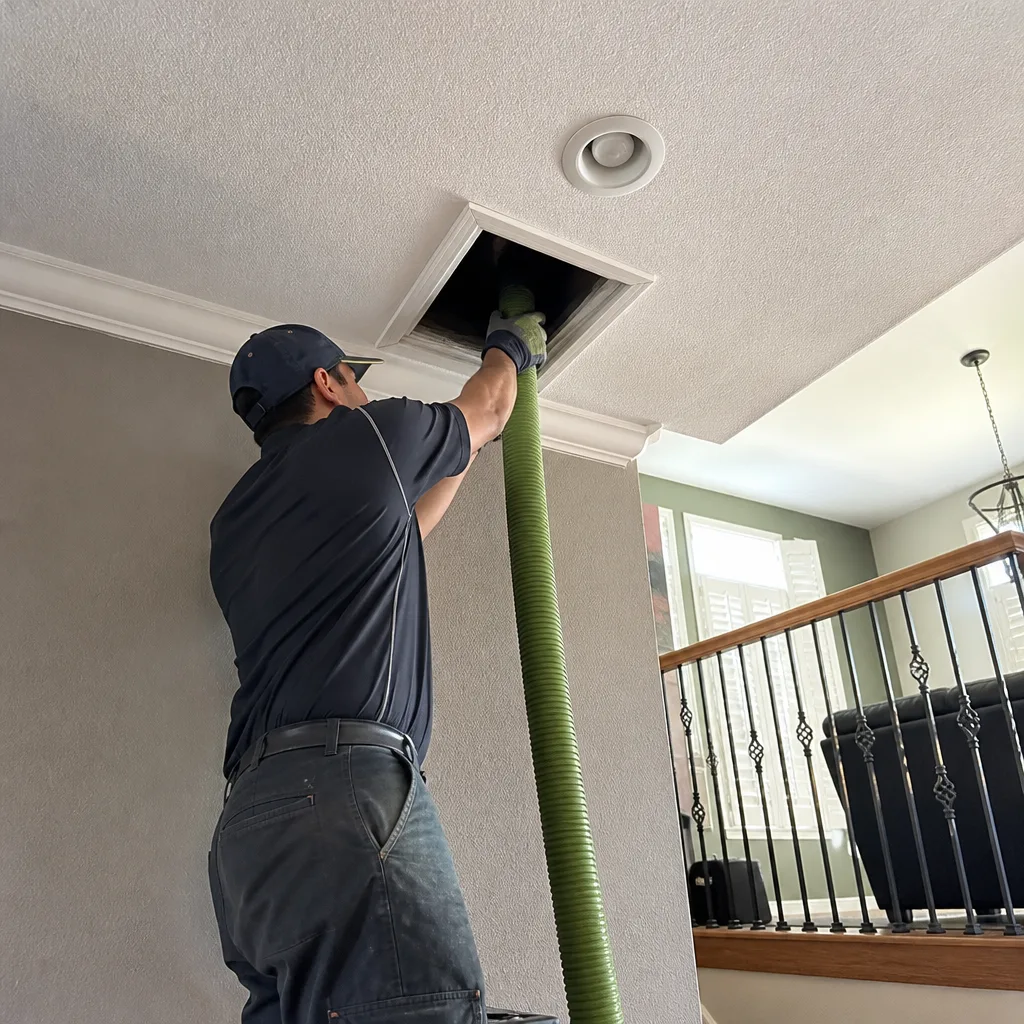
Negative-air containment means what comes out of your ducts stays out of your living space. That phrase gets used a lot in our industry, but the mechanics are simple: a sealed collection unit with HEPA-grade filtration pulls air from the duct system, traps the particulate, and exhausts clean air. Without containment, a sloppy cleaning job sends a cloud of dust and mold spores into your bedrooms and living room. We pair Nikro negative-pressure units with Abatement Technologies containment protocols on jobs where debris loads are heavy or occupant sensitivity is a concern.
Abatement Technologies: Remediation-Grade Equipment for Serious Situations
Abatement Technologies sits at the far end of the professional equipment spectrum. Their negative-air machines and containment barriers are standard gear in mold remediation, asbestos abatement, and hospital infection-control isolation. For routine duct cleaning, running a full Abatement Technologies containment setup is overkill in the same way a fire truck is overkill for a garden hose leak. But there are Valley Hi situations where remediation-grade equipment is exactly the right call.
When Abatement Technologies Equipment Is Warranted
- Visible mold growth inside ducts: If you can see mold on vent surfaces or smell it when the system runs, cleaning alone won’t fix the underlying moisture problem. But the cleaning portion of the work needs to happen under containment so spores don’t spread through the home. Abatement Technologies negative-air equipment creates that containment.
- Severe rodent or pest contamination: Rodent droppings in ducts carry health risks. Cleaning them out requires HEPA-level filtration and disposal protocols. This is a contaminated-material scenario, not a dust scenario.
- Post-fire or smoke damage: If a Valley Hi home has had a kitchen fire or nearby wildfire smoke intrusion, duct deposits can include char and smoke residue. Remediation-grade equipment handles this more safely than a standard cleaning system.
An honest contractor will tell you when remediation-grade equipment is necessary and when it isn’t. If every company you call insists you need mold remediation because your ducts are dusty, walk away. If you can see mold and a company quotes a $99 cleaning special without mentioning containment, walk away faster. Equipment honesty cuts both directions.
Matching Equipment to Your Duct Type: Rigid vs. Flex Duct
Here’s the conversation most Valley Hi homeowners never have: what kind of ducts are actually in your house? It’s the single most important variable in choosing the right cleaning approach and equipment brand. Most homes in the area have some combination of the two main duct types, and each demands a different method.
Rigid Sheet Metal Ducts
Rigid ducts are formed from galvanized steel and connected with seams, collars, and drive cleats. Valley Hi homes built before roughly 1990 often have full rigid systems or rigid trunk lines with flex branch runs. Rigid metal ducts handle rotary brush agitation well. The interior surface is hard and uniform, so a Rotobrush head glides through without snagging. The risk with rigid ducts isn’t brush damage. It’s seam separation, especially in older systems where the duct sealant or tape has degraded. A professional checks seams after cleaning and addresses any that have opened, because a separated seam leaks conditioned air into the attic or crawlspace. That’s why legitimate duct cleaning sometimes uncovers the need for air duct repair in Valley Hi: cleaning reveals damage that was already there, hidden under a layer of grime.
Flex Duct
Flex duct has a spiral wire coil supporting a plastic inner liner, fiberglass insulation, and an outer vapor barrier. It’s lightweight, cheap to install, and everywhere in newer Valley Hi construction. It’s also far less tolerant of aggressive mechanical cleaning. An oversized rotary brush can tear the inner liner, knock the wire coil loose, or compress insulation. Once the inner liner is compromised, the duct leaks air and gives dust a place to accumulate indefinitely. For flex-heavy systems, negative-pressure cleaning with controlled agitation is the safer approach. This is where Nikro’s methodology wins: it doesn’t rely on aggressive brushing to do the work.
The right cleaning company doesn’t guess which duct type you have. They ask, or better yet, they inspect. A quick visual check at the registers and a look in the attic or crawlspace tells a technician everything they need to know. If a company quotes you a price over the phone without asking a single question about your home’s construction era, duct material, or system layout, they’re not planning to match equipment to your actual ducts. They’re planning to show up with whatever fits in the van and make it work.
Questions to Ask a Duct Cleaning Company Before You Book
You’re not hiring a machine directly. You’re hiring a company that chooses, maintains, and operates equipment. The questions below will separate companies that know their equipment from companies that know their sales script. A credible answer takes 30 seconds and sounds like someone who has actually looked at ductwork. A deflection sounds like a price, a special, or a promise.
The Five Questions That Matter
- “What equipment do you use, and why did you choose it?” A credible answer names specific systems: Rotobrush rotary brush, Nikro negative-pressure unit, Abatement Technologies containment. A weak answer says “commercial-grade equipment” or “powerful truck-mounted vacuums” without specifics.
- “How do you determine which method to use on my ducts?” Listen for the phrase “we inspect before we clean.” The right company assesses duct type, debris load, and accessibility before choosing brush agitation, negative pressure, or a blend of both.
- “What do you do to keep dislodged dust from getting into the house?” The right answer involves containment: sealed collection units, negative-air pressure, and HEPA filtration. If they don’t understand the question, they don’t have a containment protocol.
- “Do you inspect for damage while you clean?” Professional duct cleaning companies check seams, joints, and flex condition during the job. Companies that clean only and never mention repair may be missing disconnected ducts or torn liners, especially in Valley Hi’s aging housing stock.
- “Can I see before-and-after photos of my own ducts?” This question terrifies the fly-by-night crowd. Professional equipment paired with a camera inspection lets you see the interior of your ducts before and after. If a company can’t show you your own ductwork, they’re not actually cleaning it.
At Air Duct Cleaning Valley Hi, we run Rotobrush and Nikro systems because Valley Hi’s housing mix demands both: rotary agitation for older rigid-metal homes and negative-pressure care for flex-heavy newer builds. We document every job with before-and-after photos of the actual duct interiors, not stock photos of someone else’s house.
Red Flags That Signal the Wrong Equipment
You don’t need to become a duct-cleaning equipment expert to spot the warning signs. Some red flags are visible the moment the tech opens the van door. Others emerge mid-job. All of them signal that the company either doesn’t have professional equipment or doesn’t know how to use it.
- The equipment fits in a duffel bag: A real duct cleaning setup includes a high-CFM collection unit, hose runs, brush heads in multiple sizes, and camera inspection gear. If the entire operation fits in a backpack, it’s not cleaning your ducts. It’s vacuuming your registers.
- No visible vacuum power: Professional systems move thousands of cubic feet of air per minute. You should hear it. A whisper-quiet “cleaning” means a shop vac with a long hose, which lacks the airflow to pull debris from a full duct run.
- The tech runs one pass and calls it done: Thorough duct cleaning means working every reachable section: returns, supply runs, trunk lines, and plenums. A completed professional job takes 2 to 4 hours for a typical Valley Hi home, not 45 minutes.
- The estimate didn’t include an inspection: If the first time anyone looks at your ductwork is when they start cleaning, there’s no ability to match equipment to your actual system. Inspecting first is non-negotiable.
- No camera verification: After the cleaning, you deserve to see what the inside of your ducts looks like. Companies without camera inspection capability can’t prove anything. They’re hoping you won’t ask.
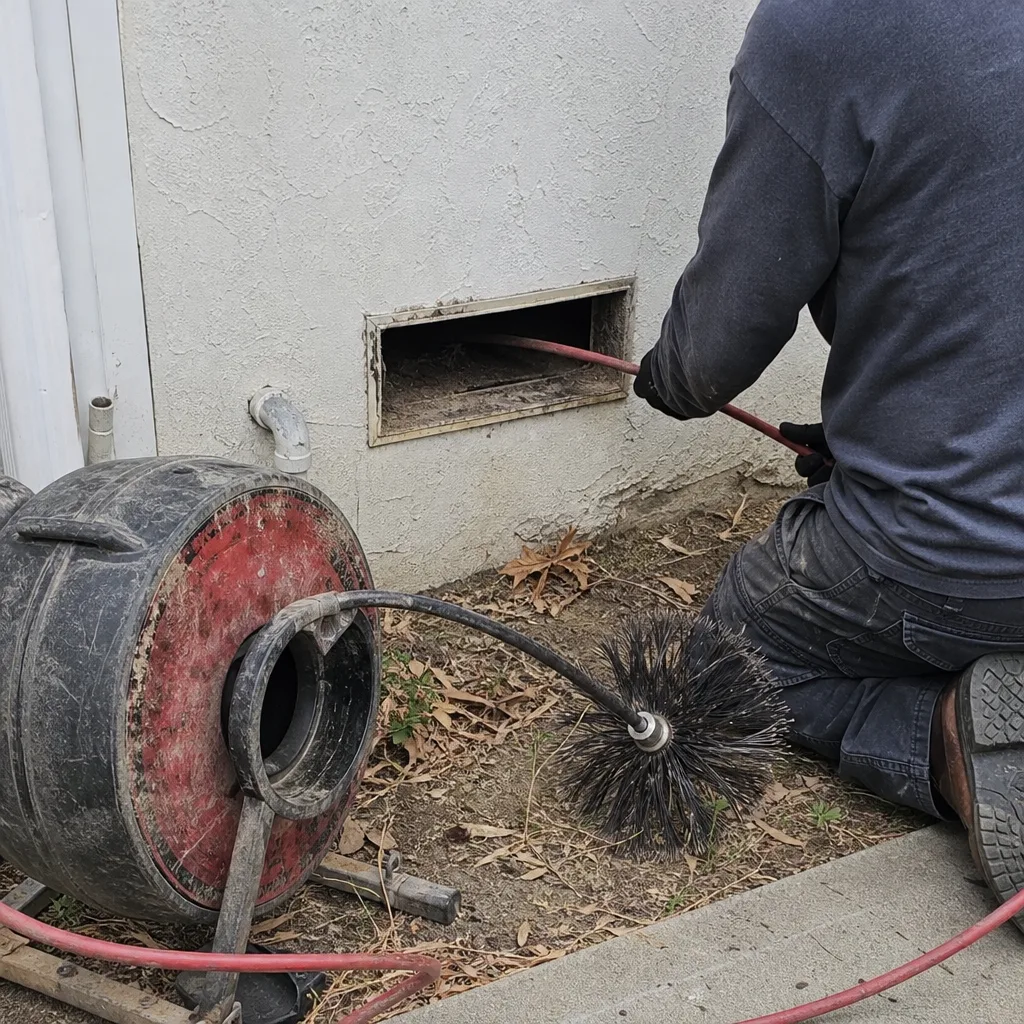
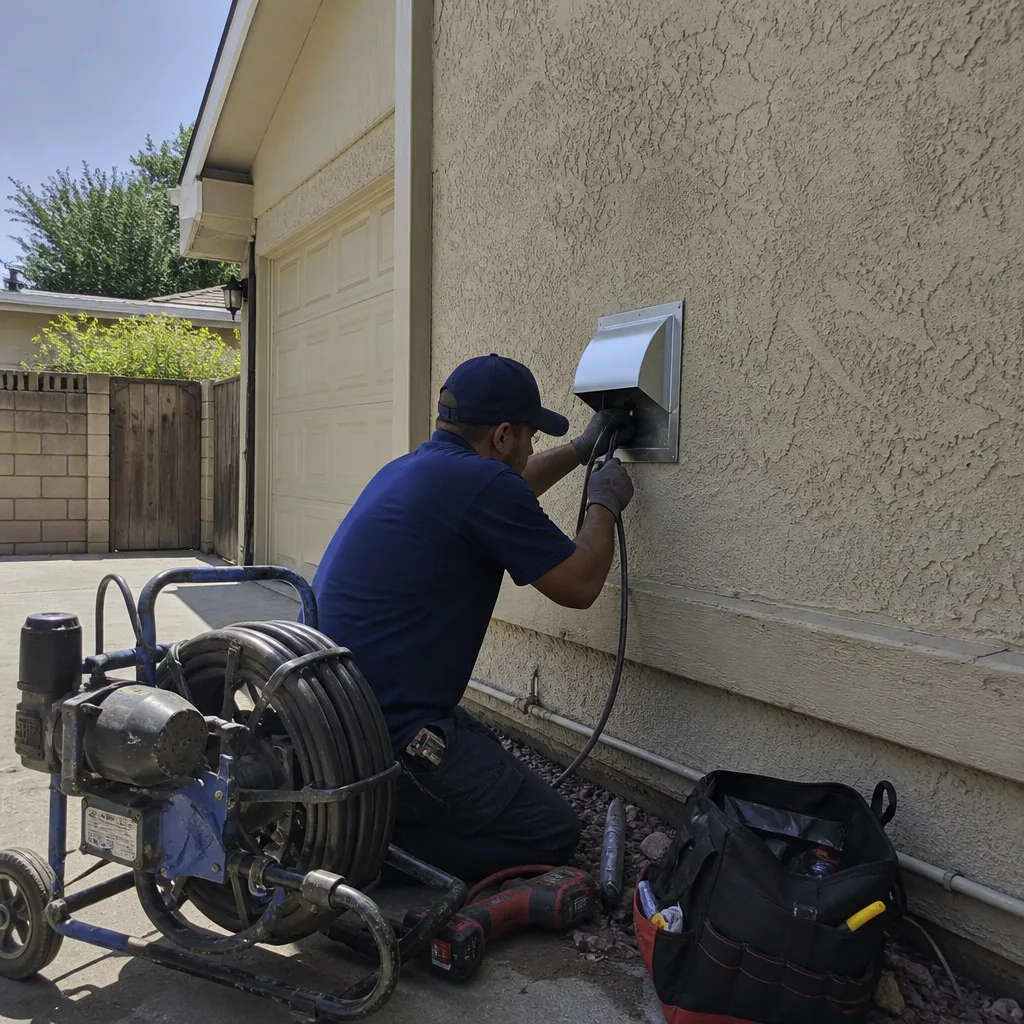
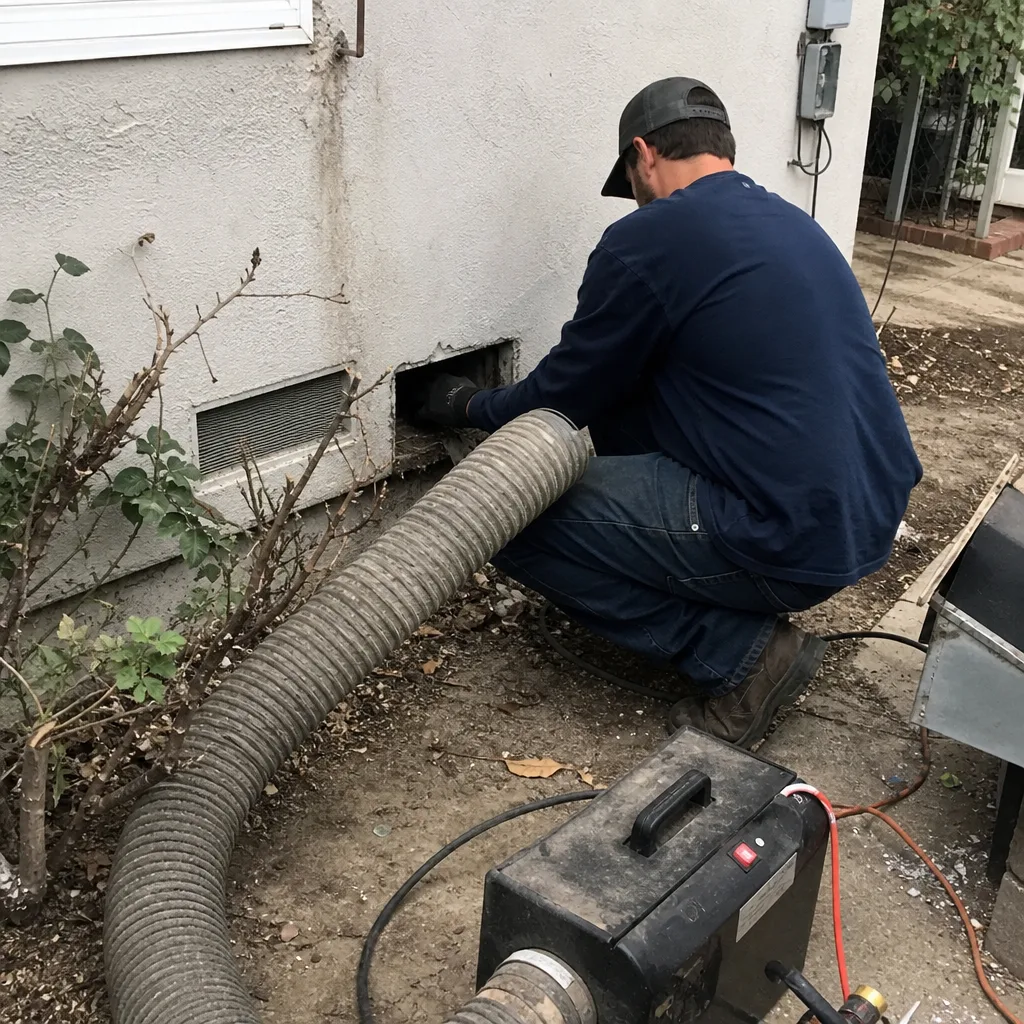
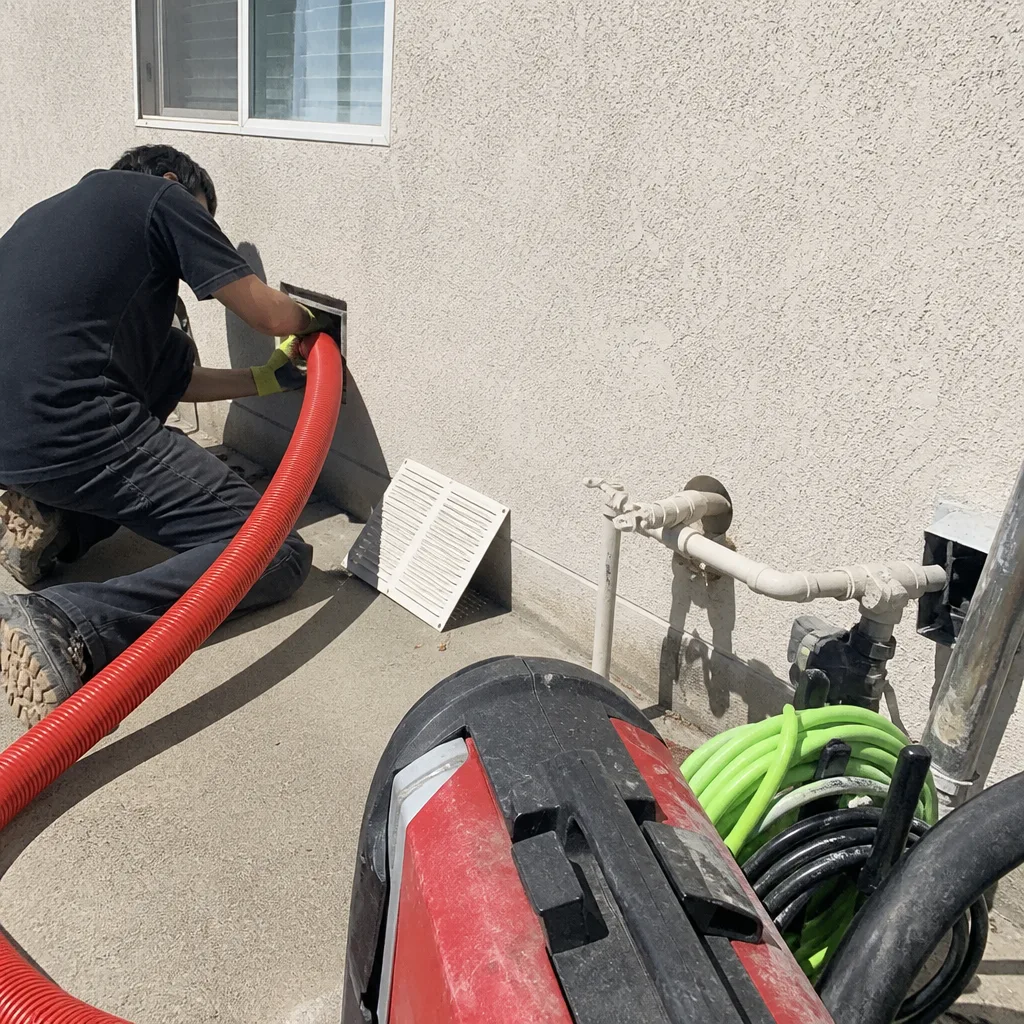
One more thing: dryer vent cleaning in Valley Hi should also involve real equipment, not a leaf blower taped to a vent cap. Lint packs into the vent run and requires rotary brushing paired with high-CFM extraction to remove. If a company treats dryer vent cleaning as a 15-minute add-on, they’re not addressing the fire-safety problem that packed lint creates.
What DIY Duct Cleaning Can’t Do (And Why It’s Risky)
You can remove a vent cover and vacuum the first foot of duct. You can change your furnace filter. You can even rent a small duct-cleaning machine from a big-box store and give it a go. But here’s what DIY duct cleaning structurally cannot accomplish, no matter how determined you are on a Saturday morning.
First, reach. The branches of your duct system extend 15 to 30 feet from each register. A rental machine or household vacuum can’t get a brush head through the entire run, especially around elbows and boots. You clean the visible portion and leave the rest untouched, which actually makes things worse: the loose particulate at the far end of the run becomes airborne next time the blower kicks on.
Second, filtration. Household vacuums and rental units don’t have HEPA-grade filtration. Whatever they pick up gets exhausted back into the house as fine particulate. You’re not removing dust. You’re converting settled dust into airborne dust and breathing it.
Third, damage control. Flex duct tears easily. A rotating brush in the wrong hands becomes a duct-destroying tool. Professional companies carry repair materials and know how to spot damage before it becomes a problem. If you tear a flex liner with a rental machine, you’ve turned a $400 cleaning into a $1,200 repair job.
Dryer vents are the exception where DIY is outright dangerous. Lint is flammable. Packed lint inside a vent run ignites under normal dryer operating temperatures. Every year, thousands of house fires trace back to clogged dryer vents. This is a safety service. Professional Dryer Vent Cleaning in Valley Hi includes checking the entire run length, from dryer to exterior termination, and verifying proper airflow afterward. The equipment for this job needs to reach 15 to 25 feet through the vent with proper agitation and extraction. A consumer leaf blower doesn’t do that. It blows a hole through loose lint and compacts the rest.
Common Mistakes to Avoid
- Choosing by price alone: The $49 whole-house special is a known bait-and-switch across the Sacramento area. The price gets them in the door. The upsell gets you to $800. Legitimate duct cleaning for a typical Valley Hi home costs between $350 and $600 for the full system.
- Trusting “truck-mounted” as a proxy for quality: Truck-mounted equipment carries its own power, but that tells you nothing about whether it has proper brush heads, containment, or HEPA filtration. Ask about method, not mounting.
- Skipping the dryer vent: Duct cleaning and dryer vent cleaning are separate services with separate equipment and separate safety profiles. A dryer vent clogged with lint is a fire waiting on a spark. Don’t treat it as an optional add-on.
- Cleaning ducts without fixing leaks: If your duct system has separated seams, disconnected branches, or torn flex, cleaning it is the equivalent of vacuuming a room with the windows open. Valley Hi’s older homes frequently have duct leakage. The system needs to be sealed and repaired for the cleaning to matter.
- Not asking about equipment brands by name: “Professional-grade” is a marketing phrase. Rotobrush, Nikro, and Abatement Technologies are actual manufacturers with actual reputations. Ask which systems the company runs. If they can’t answer, they’re not running professional equipment.
- Believing ducts need cleaning every year: For most Valley Hi homes, professional duct cleaning every 3 to 5 years is right. More frequent cleaning suggests you have an underlying problem: leaking return ducts pulling attic air, a failed filter, or a moisture issue. Find the cause before you pay for another cleaning.
- Ignoring the filter: Your HVAC filter is the duct system’s first line of defense. A quality filter changed regularly does more for everyday dust than any cleaning. The duct cleaning removes what the filter missed. It’s a team effort, not a one-time fix.
When to Call a Professional
Certain situations leave no room for experimentation. If you’ve moved into a Valley Hi home with no record of prior duct cleaning and visible dust at the registers, schedule an inspection. If renovation work just finished and drywall dust settled everywhere, your ducts need professional attention before you run the HVAC system. If someone in the home has persistent allergies, asthma, or respiratory issues, the condition of your ductwork deserves documented verification, not guesswork. And if you can see mold inside a vent opening or smell a musty odor when the system cycles on, that’s a containment-grade problem that needs professional assessment. Air Duct Cleaning Valley Hi offers free estimates in Valley Hi. Call (833) 399-2759 to schedule an inspection and equipment-matched cleaning.
Frequently Asked Questions
A complete duct cleaning for a typical Valley Hi single-family home runs between $350 and $600, depending on system size, number of vents, duct type, and debris load. Homes with flex duct take more care and time. Homes with evidence of mold, pest contamination, or severe post-construction dust may cost more due to containment requirements. If a quote is under $150, it’s a bait price. Call (833) 399-2759 for an exact quote based on your specific system, estimates are free.
There is no single best brand. Rotobrush rotary systems work best for rigid sheet metal ducts with adhered debris. Nikro negative-pressure systems handle heavy loose debris and flex duct gently. Abatement Technologies equipment is built for contamination scenarios requiring containment, like mold or post-fire residue. The right company owns or has access to multiple systems and matches the tool to your duct type and condition, not the other way around.
Cheaper quotes fall into two categories. Either the company is running consumer-grade equipment that can’t actually clean full duct runs, or the quote is a teardown price designed to get a technician in the door to upsell. Professional equipment costs real money to buy, maintain, and operate. That cost appears somewhere on the invoice. A $49 special that turns into an $800 job isn’t cheap. It’s a sales process disguised as a price.
Demand before-and-after photos taken with a camera inside your actual ductwork. Professional companies document every job this way. You should see the interior of your supply runs, return plenum, and trunk line before and after cleaning. If a company can’t show you your own ducts, they haven’t verified their own work.
Every 3 to 5 years is the honest interval for most Valley Hi homes. Homes with pets, smokers, recent renovation, or occupants with respiratory conditions may want cleaning every 2 to 3 years. Homes with excellent filtration and tight duct systems may go 5 to 7 years. More frequent cleaning without an underlying issue being addressed means you’re treating a symptom, not the cause. A professional inspection will tell you where you actually stand.
With the wrong equipment, yes. Aggressive rotary brushes can tear the plastic inner liner of flex duct or dislodge the wire coil. The damage then leaks conditioned air and gives dust a permanent foothold. Professional companies inspect duct type before choosing a method and use gentler negative-pressure approaches when flex duct is present. This is exactly why matching equipment to your actual duct system matters more than the brand name on the invoice.
The Bottom Line
The air duct cleaning brand that matters isn’t the name on the van door. It’s the name on the machine doing the work. Rotobrush systems provide mechanical agitation that scrubs rigid metal ducts clean. Nikro systems use negative pressure and HEPA filtration to handle heavy debris and delicate flex duct with equal competence. Abatement Technologies brings containment capability for situations where what’s in the ducts shouldn’t be in your living space. Professional companies own or access these systems and know when to use each. The questions you ask determine whether you get professional cleaning or a show with a shop vac. Ask about equipment by name. Ask about inspection, containment, and documentation. And if the answers sound evasive, call someone else. Air Duct Cleaning Valley Hi has served Valley Hi homeowners since 2018 with professional-grade Rotobrush and Nikro equipment, and we’re happy to show you exactly what’s in your ducts before and after we clean them.
Written by the team at Air Duct Cleaning Valley Hi, serving Valley Hi since 2018.
See the difference
 Before
 After
 Before
 After
 Before
 After