
Last updated November 2, 2026
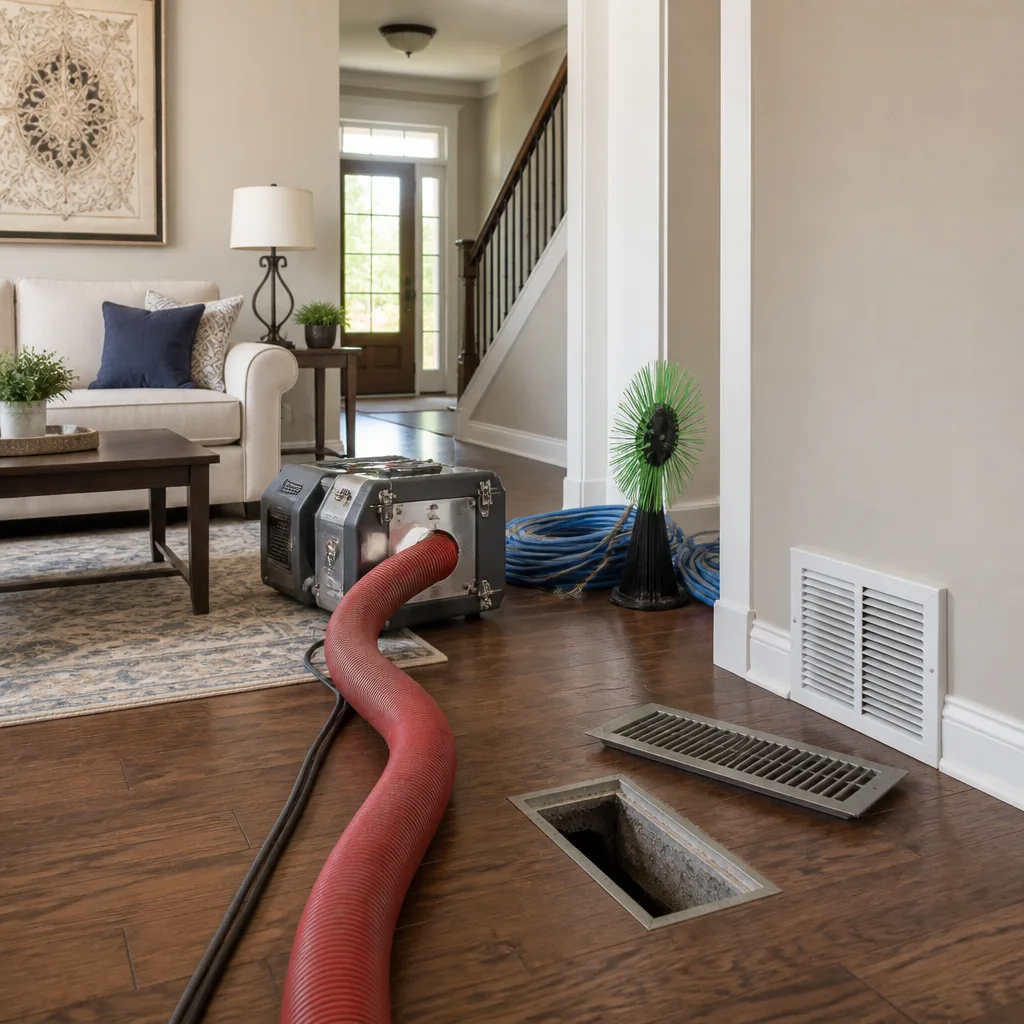 Whole-home duct cleaning
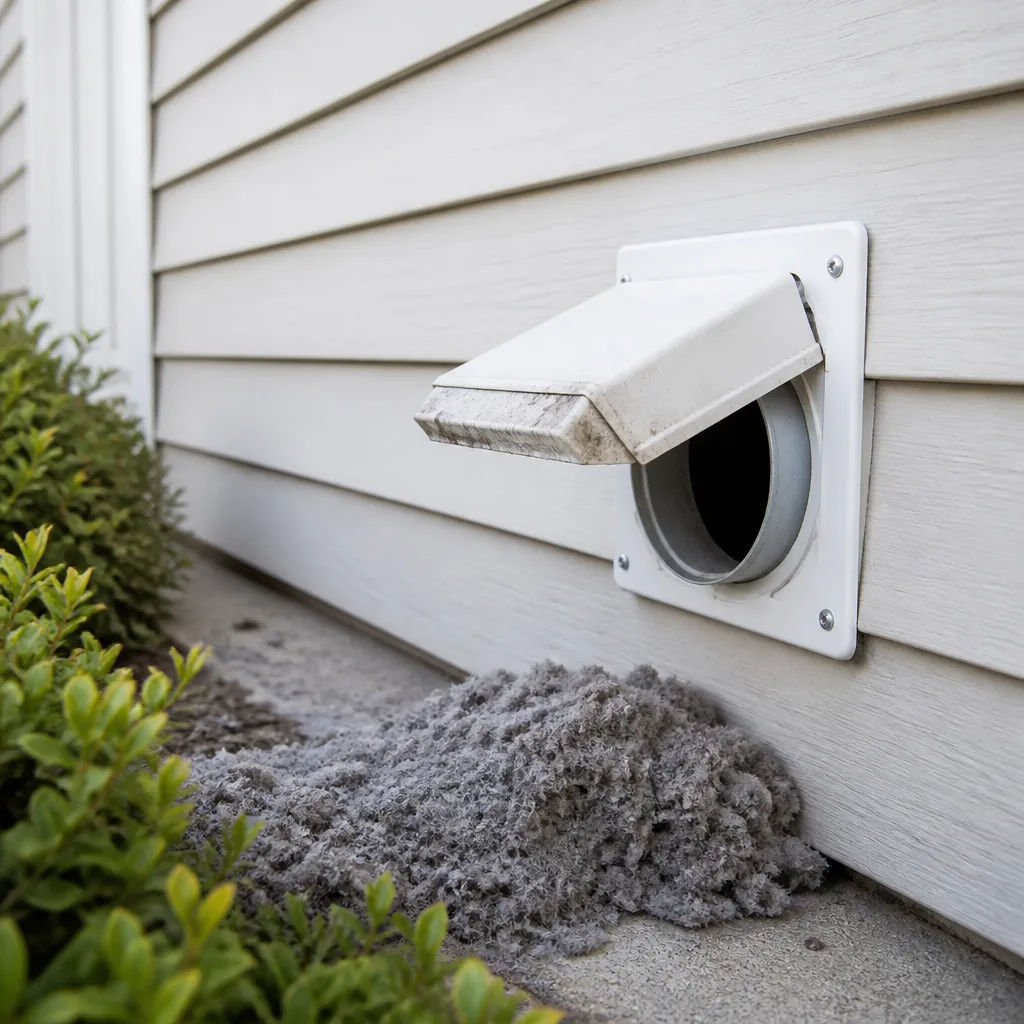 Dryer vent cleaning
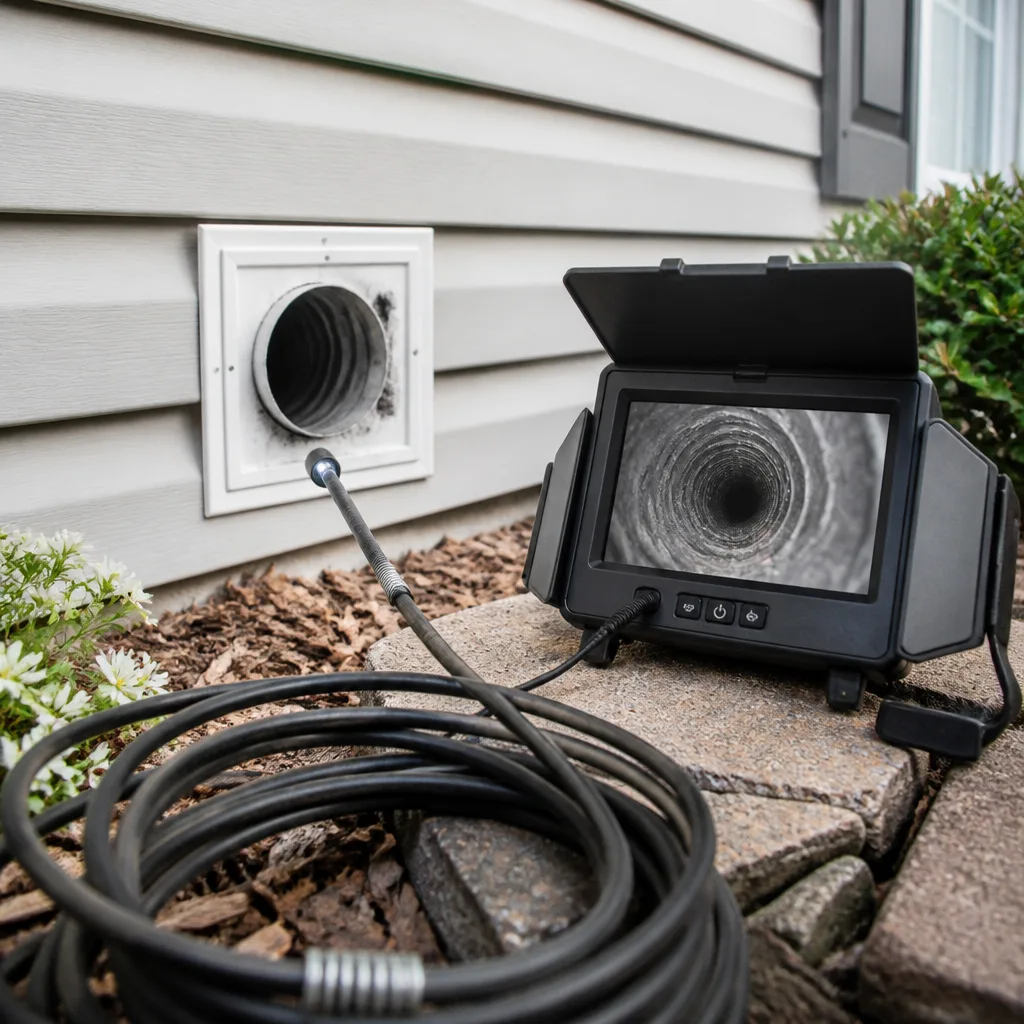 Camera inspection
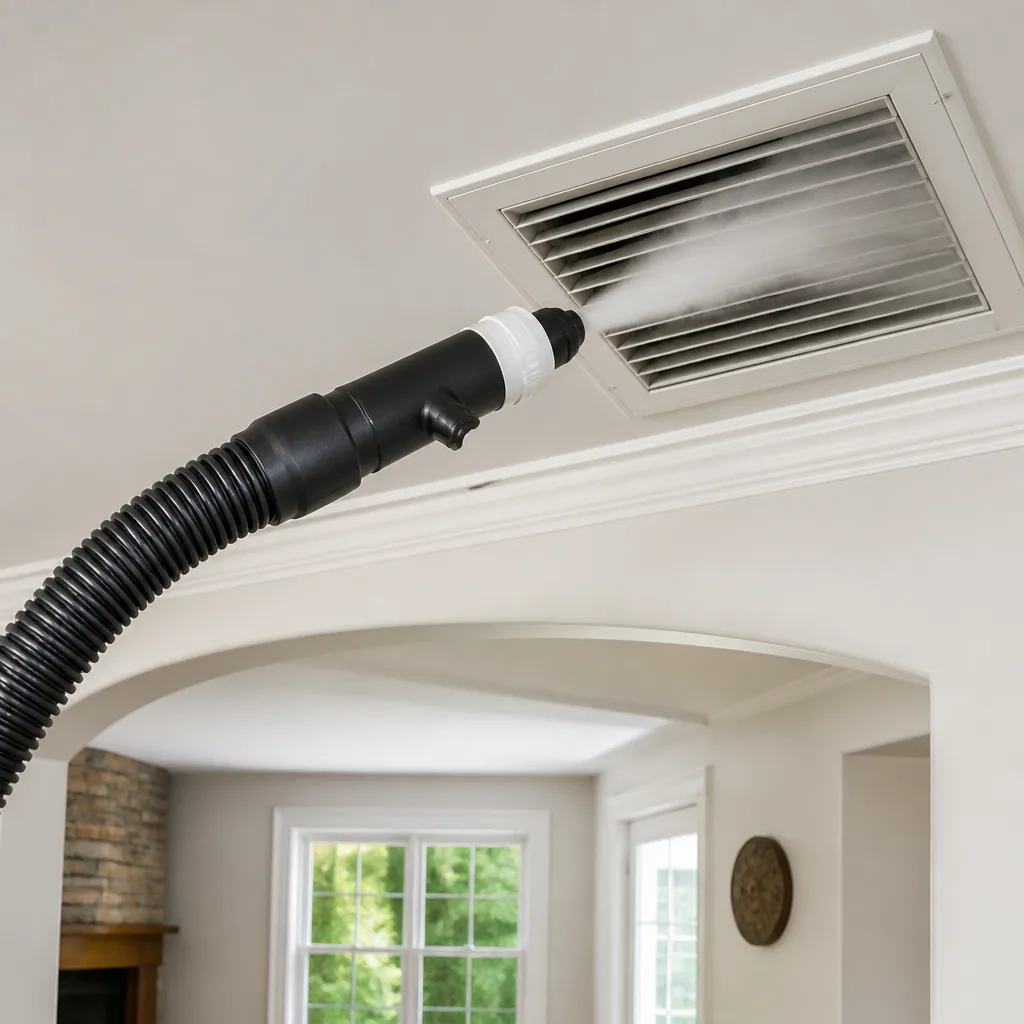 Sanitizing & deodorizing
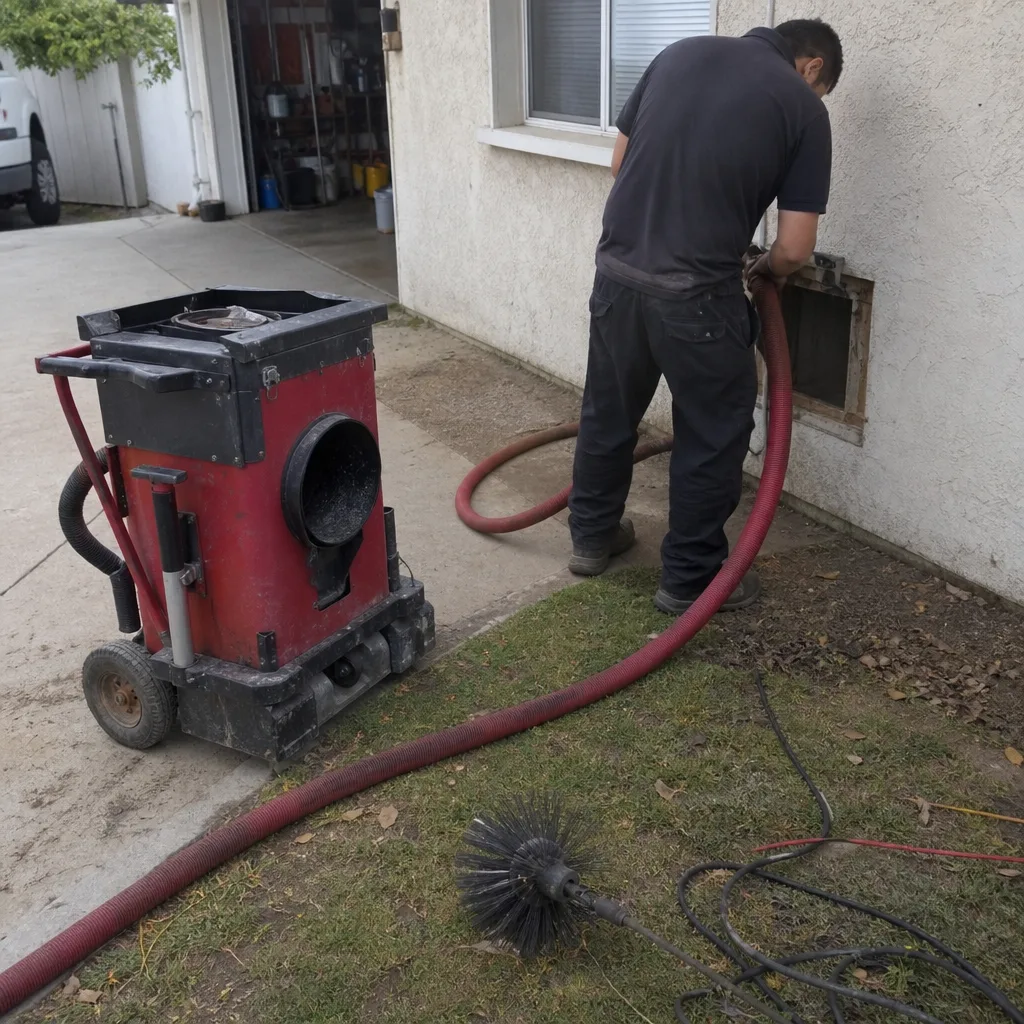
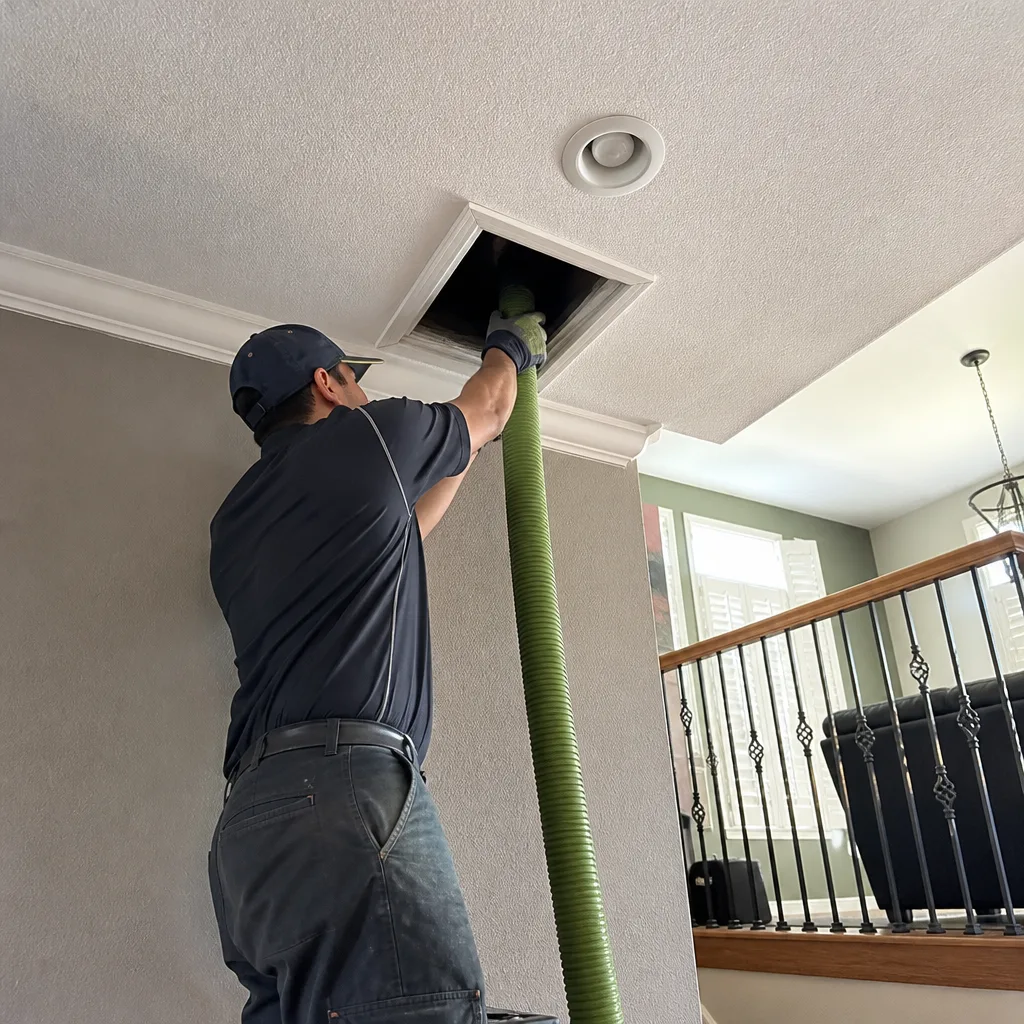
Whole-system duct and dryer vent check with before-and-after photos - you see exactly what came out of your vents
That "$99 whole-house special" is a bait ad - the real number appears once they are in your hallway, or the "clean" is a shop-vac at the register. We photograph the inside of your ducts before and after instead.
Air Duct Cleaning Cost Breakdown: The Valley Hi Homeowner’s Reference for 2026
A $99 whole-house duct cleaning and a $600 whole-house duct cleaning aren’t two prices for the same service. They’re two completely different services that happen to share a name. The first sends someone through your home with a shop vac and a squeegee on a stick. The second puts a professional-grade negative-air system on your furnace, agitates years of caked debris with a Rotobrush, and contains every particle it dislodges. This Air Duct Cleaning Maintenance Checklist for Valley Hi Homeowners explains what each line item in a legitimate Valley Hi duct cleaning quote should represent, so you can evaluate price against actual scope of work instead of guessing.
Styles & brands we work with
- Whole-home duct cleaning
- Dryer vent cleaning
- Camera inspection
- Sanitizing & deodorizing
Quick Answer
Air Duct Cleaning in Valley Hi, CA typically costs $350 to $650 for a standard 3-bedroom, 2-bath home in 2026, with larger homes or systems with multiple zones running $700 to $1,100. That price range reflects professional negative-air cleaning with rotary brush agitation, not a shop-vac-and-brush job. Quotes below $200 should raise immediate questions about what equipment is actually being used and what’s included.
Table of Contents
- What a Legitimate Air Duct Cleaning Should Actually Cost in Valley Hi
- What Actually Drives Cost Variation: The Real Variables
- Why Equipment Matters More Than You Think: Rotobrush vs. Shop Vac
- Add-On Services: Which Are Legitimate and Which Are Padding
- How to Compare Quotes: Read the Scope, Not the Total
- Valley Hi-Specific Factors That Affect Your Quote
- Red Flags in Low-Ball Quotes: What the Coupon Doesn’t Tell You
- Common Mistakes to Avoid
- When to Call a Professional
- Frequently Asked Questions
- The Bottom Line
What a Legitimate Air Duct Cleaning Should Actually Cost in Valley Hi
Let’s get straight to the numbers, because that’s what you came for. In the Valley Hi market, a legitimate whole-home air duct cleaning on a standard 3-bedroom house with 10 to 14 supply vents, 2 to 3 return registers, and a single HVAC unit falls between $350 and $650. That’s the 2026 baseline for professional work using negative-air equipment and rotary brush agitation, not the bottom of a coupon flyer.
Here’s what that range breaks into by system size:
- Small home or condo (under 1,200 sq ft, 1 zone): $300 to $450
- Standard 3-bedroom home (1,200 to 2,000 sq ft, 1 zone): $350 to $650
- Larger home (2,000 to 3,000 sq ft, 2 zones): $600 to $900
- Large custom home (3,000+ sq ft, 2+ zones or multiple units): $800 to $1,100
These are whole-system prices, not per-vent quotes. A contractor who prices per vent is already telling you something about how they operate. Per-vent pricing creates a teaser number like $12 per vent, then the invoice arrives and you discover your “10-vent home” has 16 vents by their count, plus returns, plus trunk lines. Whole-system pricing means you agree on one number before work starts and that’s the number you pay.
Our Air Duct Cleaning Valley Hi home approach is exactly that: a flat system price quoted before we arrive, based on the actual home and its actual ductwork, not a per-opening estimate that grows while the van is parked in your driveway.
What Actually Drives Cost Variation: The Real Variables
If two Valley Hi homes on the same street get two different quotes, there’s usually a reason. Not always a good reason, but usually a reason. Here are the factors that legitimately change labor time, equipment time, and therefore price:
Square Footage of Ductwork, Not Just the House
A 1,800-square-foot home with a single trunk line and short branch runs cleans faster than a 1,800-square-foot home with long duct runs snaking through a crawlspace. The physical length of ductwork matters more than the home’s finished square footage, which is why a pro will ask about your floor plan or check the system layout before quoting.
Duct Material Type
Sheet metal ducts tolerate aggressive agitation. Flex duct – that soft, accordion-style tubing in many Valley Hi homes built in the 1980s and 1990s – requires lower torque and more care. It takes longer to clean flex duct properly without damaging it, and that time shows up in a legitimate quote. Anyone who quotes the same price regardless of duct material isn’t planning to adjust their technique.
Number of Zones and HVAC Units
A single-unit, single-zone system is the baseline. Add a second unit, a zoned damper system, or a multi-story setup, and the technician is effectively cleaning two separate systems. That’s not a 50% upcharge – usually more like 30-40% more – but it should be reflected explictly in the quote.
Access Difficulty
This is the one homeowners forget. If your HVAC unit is in a cramped basement with 5-foot clearance, or your returns are in a finished wall requiring careful cut-and-patch access, or your crawlspace is tight and rocky, the job takes longer. A technician sealing an access point into the plenum, running a negative-air hose through a window, or working around finished ceilings is doing real work that a wide-open garage attic job doesn’t require.
System Age and Condition
Older systems often have more embedded particulate – decades of Sacramento Valley dust, pet dander, and whatever the previous owner’s renovation kicked into the returns. A system that hasn’t been cleaned in 20 years takes materially longer than one cleaned 3 years ago. Sometimes that’s simply more agitation passes; sometimes it reveals damage that needs air duct repair in Valley Hi, which is a separate service line. A legitimate company flags this at inspection, not after the job starts.
Why Equipment Matters More Than You Think: Rotobrush vs. Shop Vac
This is where the price split happens, and it’s worth understanding exactly what you’re paying for. The difference between a $150 clean and a $500 clean is mostly equipment – and equipment determines whether the job actually does anything.
A consumer-grade shop vac generates about 150 cubic feet per minute of airflow at best, and it loses suction quickly as the filter loads with dust. It has no agitation to break loose the caked-on layer of debris that lines most duct interiors. It has no containment – whatever it doesn’t capture gets blown back into your living space or simply falls back into the ducts when the vacuum shuts off.
A professional negative-air system – the kind built around a Rotobrush or Nikro platform – is a different machine entirely. It pulls 2,000 to 4,000 CFM of continuous airflow through the ducts while a rotating brush physically scrubs the duct walls from the inside. The negative pressure means every dislodged particle moves toward the collection unit, not into your home. Abatement Technologies containment protocols – the same negative-air methodology used in mold remediation and lead abatement – keep the work area sealed so what comes out of your ducts stays out of your living space.
The operating cost difference is real: these professional systems cost tens of thousands of dollars to acquire and maintain, require trained operators, and consume consumables like HEPA filters and containment materials. A legitimate Valley Hi duct cleaning company using this equipment has a hard cost floor that a $99 coupon operator doesn’t have because they don’t own this gear. That’s not a markup; that’s the actual cost of doing the job in a way that works.
We use Rotobrush and Nikro equipment because that’s what the job requires. A shop vac with a logo on it still can’t clean a duct system worth a damn, and we’d rather tell you that before you spend $150 finding it out the hard way.
Add-On Services: Which Are Legitimate and Which Are Padding
You will be offered extras during almost any duct cleaning estimate. Some are genuinely useful. Some are quiet profit drivers that sound better than they perform. Here’s the honest breakdown:
Dryer Vent Cleaning: Legitimate, and Honestly a Safety Issue
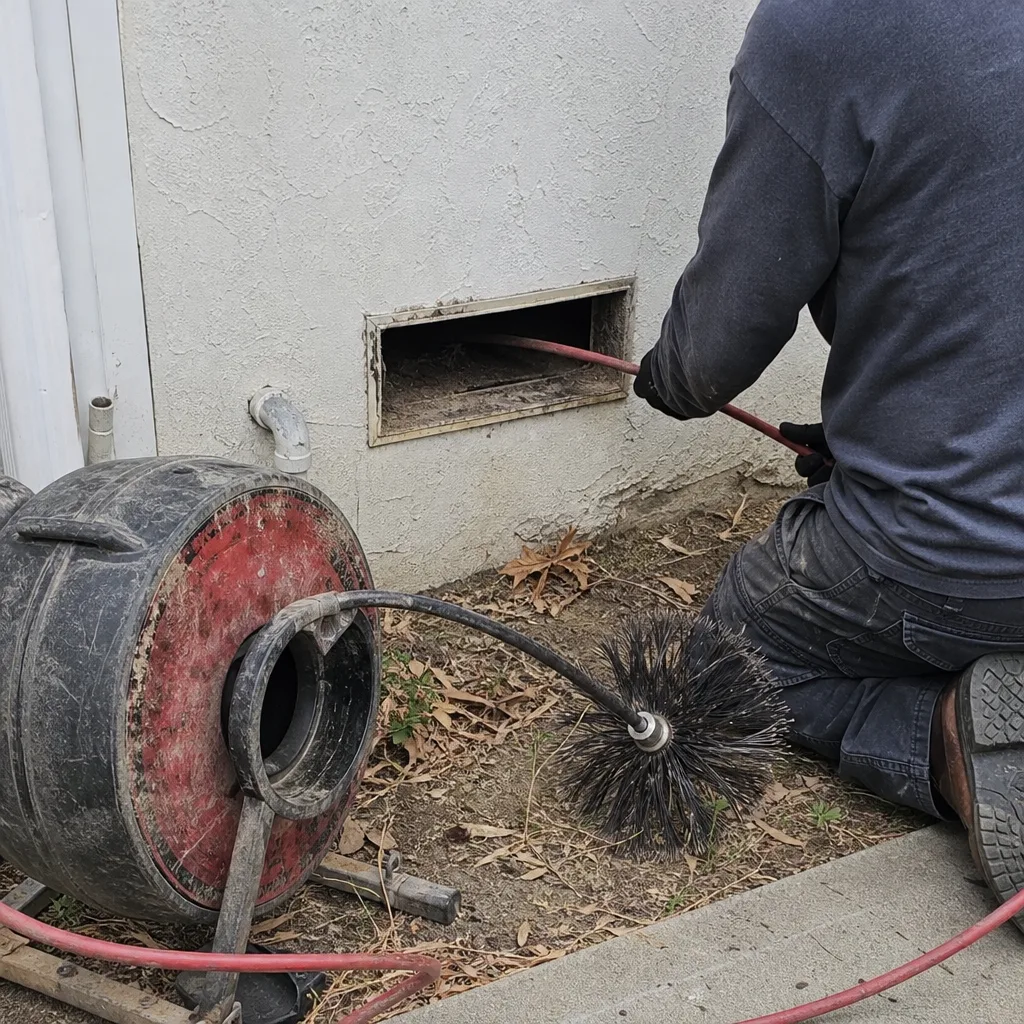
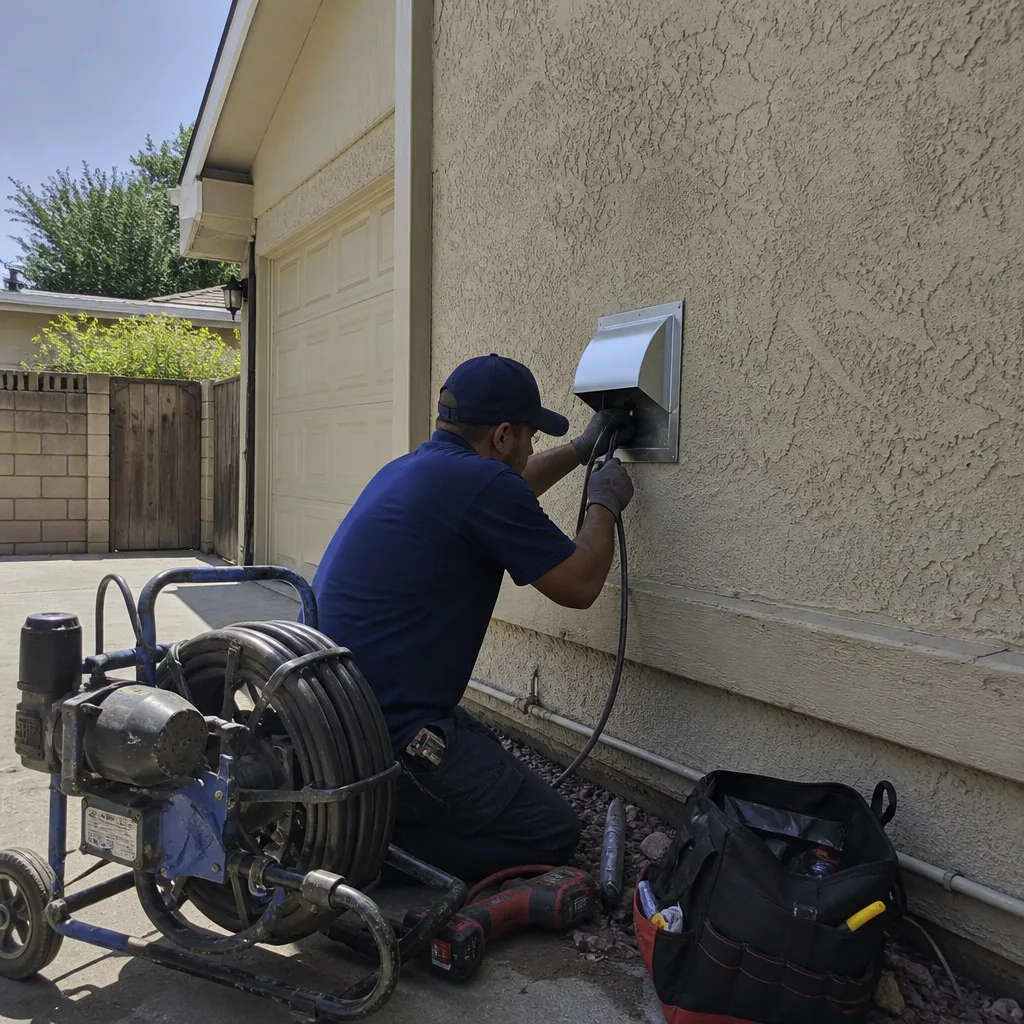
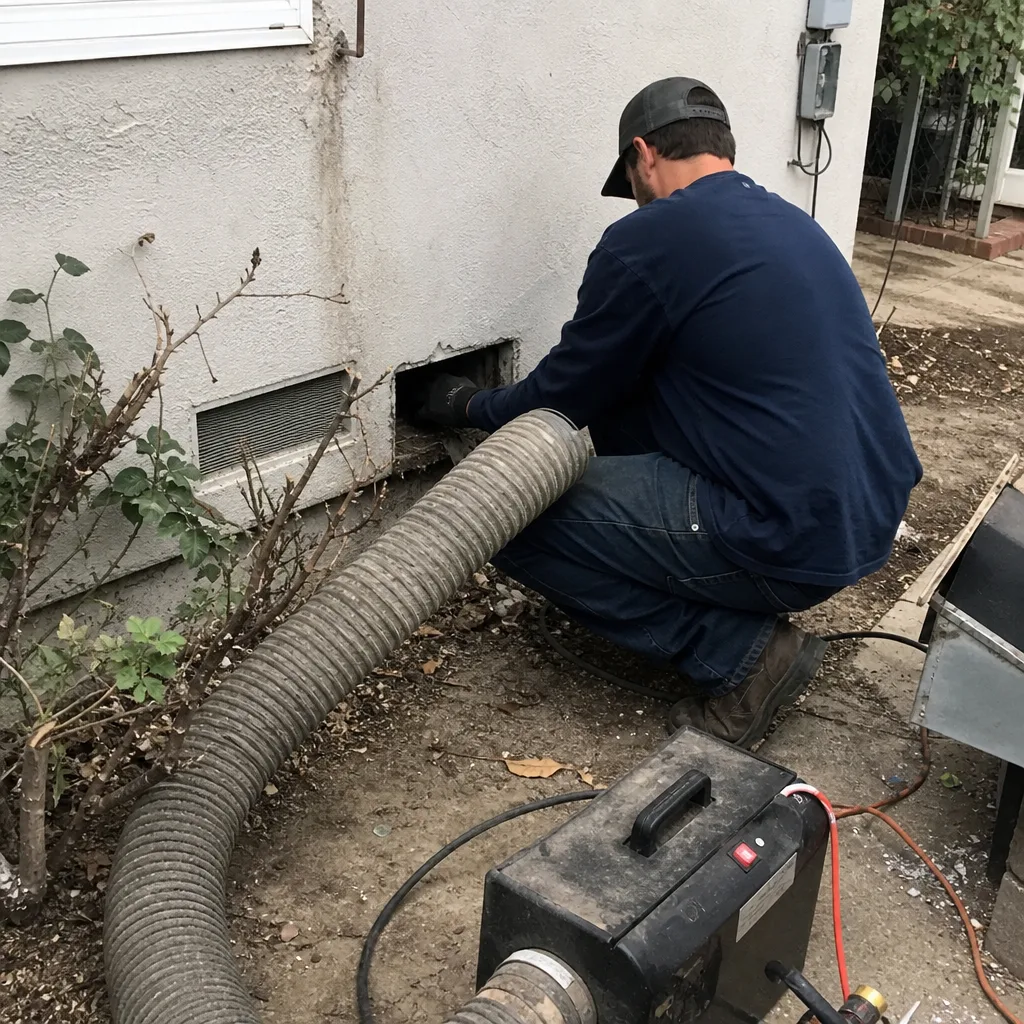
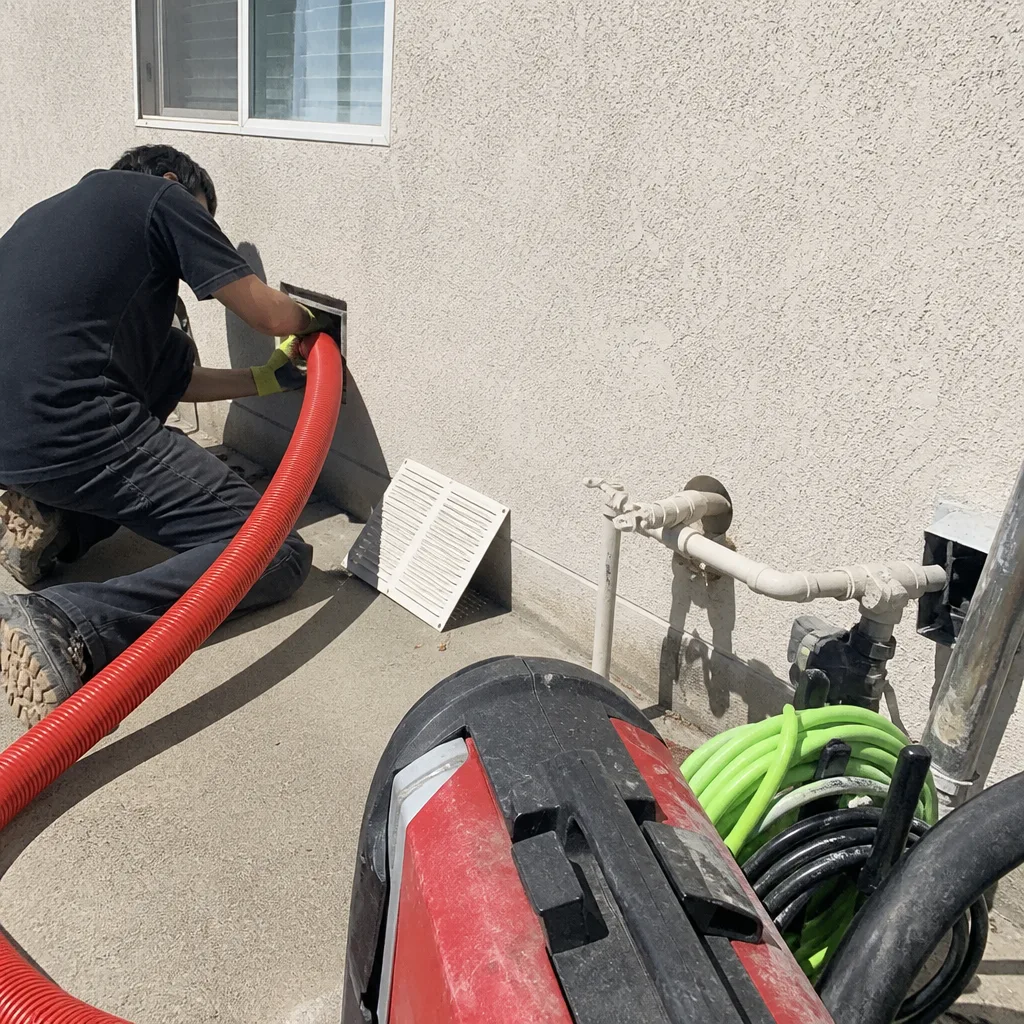
A clogged dryer vent isn’t a performance problem; it’s a house-fired-this-year problem. The U.S. Fire Administration attributes roughly 2,900 home fires annually to clothes dryers, and the overwhelming majority trace to lint accumulation in the vent line. If you haven’t had your dryer vent cleaned in two or more years, this is a legitimate add-on during a duct cleaning visit – and it’s one of our core services precisely because it’s fire prevention, not an upsell. In Valley Hi, where many homes have long, multi-bend dryer vent runs through attics and exterior walls, the risk stacks up faster than a short straight run. Our dryer vent cleaning in Valley Hi service exists because this is genuinely a separate job with separate tools and separate stakes.
Sanitizing or Fogging: Sometimes Legitimate, Often Prey to Overpromise
A biocide or sanitizing fog applied after cleaning can help reduce microbial load in ducts that have seen mold or significant biological contamination. But it’s not a substitute for cleaning, and it can’t “sterilize” a porous surface like fiberglass duct liner. If someone’s selling fogging as a cure for musty smells or allergy issues without first determining the source of the problem, they’re selling fog. The sequence that makes sense: clean thoroughly first, then assess whether sanitizing adds anything. Anyone who insists on fogging before cleaning is padding an invoice.
Mold Treatment: Real Problem, Real Cost, Verify First
If your ducts have visible mold growth – not just a musty smell, but actual visible growth on surfaces – that’s beyond routine cleaning. Proper treatment involves containment, surface-cleaning methods appropriate to the duct material, and often repair or replacement of affected components. But here’s the catch: a lot of “mold in your ducts” is actually condensation staining or dust accumulation, and a lot of companies will show you a photo of dust and say the word “mold” because it converts a $450 cleaning into a $1,800 remediation. Ask for written confirmation of what they’re seeing, and don’t agree to mold treatment without seeing the visual yourself. We’re scoped to duct cleaning, dryer vent work, and air duct repair, not mold remediation – and we’ll tell you plainly if what you’re looking at isn’t mold, because telling you to pay for remediation you don’t need is the opposite of our job.
Filter Upgrades and Air Quality Add-Ons: Useful When Specific, Pointless When Generic
If a tech suggests a higher-MERV filter or a whole-home humidifier, the value depends entirely on the specifics. A Honeywell media filter or an Aprilaire whole-home humidifier installed on the right system in the right climate is a genuine improvement. A generic “upgraded filter” pulled off the van shelf at $89 is not that. We maintain working knowledge of Honeywell and Aprilaire product lines specifically so our recommendations come with explanation – which filter, why, what it changes in your particular system – rather than a vague upsell.
How to Compare Quotes: Read the Scope, Not the Total
Three companies quoted you $299, $475, and $800 for “duct cleaning” in Valley Hi. That’s not a pricing race; it’s three different scopes of work wearing the same label. To compare them on equal terms, you need to see what’s actually written in the scope. Here’s how to do that in five steps:
- Ask for a written scope of work, not just a price. The scope should specify what’s cleaned (every supply vent, every return, trunk lines, plenums), how it’s cleaned (negative-air, rotary brush, contact cleaning), and what’s included at each stage. If they won’t put it in writing, that’s an answer.
- Check for containment language. The scope should mention negative air or containment to prevent cross-contamination. If it doesn’t, assume the work area is not being isolated and adjust your expectations accordingly – or move on.
- Verify the access and registration count. The scope should state how many supply vents and returns are included. If that number doesn’t match what you can walk around and count yourself, neither will the final invoice at a per-vent shop.
- Ask what happens if damage is found. A legitimate company will say they stop, show you the issue, and quote repair separately. A less legitimate one will either ignore the damage and clean around it, or “discover” it mid-job as an upsell. Getting this in writing before they start protects you from both.
- Ask what equipment they’re actually bringing. “Professional equipment” is a meaningless phrase. Rotobrush, Nikro, Abatement Technologies – these are specific brands of purpose-built duct-cleaning and containment systems. If they can’t name what they use, what they use is probably a truck-mounted vacuum that’s also cleaning three other houses this week between rug jobs.
The $800 quote isn’t automatically the rip-off, and the $299 quote isn’t automatically the deal. The rip-off is whichever quote won’t tell you what it’s actually doing for the money.
Valley Hi-Specific Factors That Affect Your Quote
Valley Hi has some particular characteristics that show up in duct cleaning quotes, and it helps to know them before you start calling around.
First, the building stock matters. A large share of Valley Hi homes were built between the mid-1970s and the late 1990s, which means a mix of rigid sheet metal and flex duct depending on when your system was installed or retrofitted. Flex duct from that era is often past its design life, and it needs gentler handling – or replacement, which is a repair conversation, not a cleaning one. If your quote assumes sheet-metal technique on aging flex, that’s a red flag; a technician who knows the housing stock adjusts approach and price accordingly.
Second, the climate is hard on duct interiors. Valley Hi sits in the Sacramento Valley, where long, dry summers produce fine airborne dust that gets pulled into return air streams and packed into duct linings, and where fall and spring bring bouts of humidity that can condense on cool duct surfaces and create the perfect conditions for dust to cake. Homes near open fields or the perennial grasses around the south Sacramento area typically carry more fine particulate load, which mean more time and more thorough agitation passes to get the system actually clean, not just visually swept.
Third, access conditions vary by subdivision. Some Valley Hi homes have wide, accessible attic spaces where ductwork is easy to reach; others have tight truss-framed attics or crawlspace-mounted systems that slow access and add legitimate labor time. A company that quotes before understanding your specific access situation is guessing, and guessing in duct cleaning always favors the estimator, never the homeowner.
All of this is why we quote based on your actual home, not a square-footage chart. The number that matters is the one that reflects your actual duct layout and condition – and that requires someone who has been in a lot of Valley Hi attics.
Red Flags in Low-Ball Quotes: What the Coupon Doesn’t Tell You
The $49 and $99 whole-house duct cleaning coupons floating around Sacramento in 2026 aren’t bad deals. They’re different services wearing the same name as real duct cleaning, and the coupon is the bait. Here’s what you should hear in that quote if you’re getting a real professional cleaning, and what the absence of it means:
- “Negative air” or “containment” is never mentioned. Without negative air, the dust loosened from your ducts recirculates into your living room. The technician who doesn’t mention it either isn’t doing it or doesn’t know it matters.
- No equipment brands are named. Ask what they’re running. If the answer is “professional-grade equipment” with no brand behind it, you’re getting a phrase, not a system.
- The quote is per-vent and the number of vents is vague. Per-vent pricing is the classic bait-and-switch structure. The final invoice will find vents you didn’t know you had.
- Dryer vent cleaning is thrown in “free.” Free dryer vent cleaning means someone runs a brush in and out but doesn’t actually clear the entire vent run, which is the part that catches fire. If it’s free, it’s likely incomplete – and incomplete dryer vent work is worse than none, because it gives you false confidence.
- There’s no inspection step before the price is locked. A real scope includes checking access points, counting registers, and looking at the duct material. If the price is fixed before anyone has seen your system, it’s a volume play, not a service quote.
Common Mistakes to Avoid
- Buying on price alone. If the $199 quote were for the same service as the $499 quote, the $499 company wouldn’t exist. Price differences of that magnitude reflect differences in equipment, scope, and training – not profit margin.
- Skipping the written scope. “Clean all ducts” is not a scope. Without specifics on what’s included, how it’s done, and what the number of openings is, you’re agreeing to whatever happens to happen.
- Falling for the “free inspection” that becomes a doomsday presentation. Some companies use free inspections as a lead-generation tool then present you with a $950 “emergency” recommendation. Get the inspection, but don’t authorize work during the same visit – sleep on it.
- Ignoring dryer vent safety because “the dryer works fine.” A dryer that works fine can still have a lint plug building three feet from the vent exit. By the time performance suffers, you’re already in fire-risk territory.
- Assuming newer homes don’t need cleaning. A 5-year-old Valley Hi home still pulls Sacramento Valley dust through its returns every cooling season. Age matters less than the environment the system operates in.
- Treating sanitizing as a substitute for cleaning. You can’t fog your way out of dirty ducts. Sanitizing is a finish coat, not a wash.
When to Call a Professional
Duct cleaning is one of those services where the gap between “should do it” and “should have done it a year ago” is invisible until something forces the issue. But there are clear signs. If you see dust accumulating on surfaces within days of cleaning your home, if your supply registers have visible lint or debris on the vanes, if you smell a musty or stale odor when the system runs, or if you’ve completed a major renovation that generated drywall dust and sawdust – it’s past time. If it’s been more than five years since the last cleaning and you have pets, allergy issues, or a home near open field areas of Valley Hi, schedule an inspection. Air Duct Cleaning Valley Hi offers free estimates for homeowners across Valley Hi – call (833) 399-2759 and we’ll give you an honest scope and a flat price before any work begins.
Frequently Asked Questions
Air duct cleaning in Valley Hi typically costs $350 to $650 for a standard 3-bedroom home in 2026. The range reflects system size, duct material, access difficulty, and whether it’s a single- or multi-zone setup. Call (833) 399-2759 for an exact quote based on your home – estimates are free, and our duct cleaning service uses professional negative-air equipment, not a shop-vac routine.
The cheaper quotes are usually for a different service: a shop-vac pass through visible registers rather than professional negative-air cleaning with rotary brush agitation. The equipment alone costs tens of thousands of dollars at the professional level, and that cost floor shows up in legitimate pricing. If the quote doesn’t specify containment and equipment brands, it’s cheap for a reason.
Ask for photo documentation of the duct interiors before and after. A legitimate company with the right equipment can show you the inside of your trunk lines and branches on camera, and will provide after photos showing clean surfaces. If they can’t or won’t show proof, you’re trusting a claim instead of verifying a result.
Most systems benefit from a thorough professional cleaning every 3 to 5 years, though homes with heavy pet traffic, recent renovations, or proximity to open fields may want it more often. The deciding factor should be what’s actually in the ducts when inspected, not a calendar. An inspection costs nothing and gives you a factual answer.
It’s usually a separate service line because it requires different tools and a different access path through the exterior wall. We treat dryer vent cleaning in Valley Hi as its own job focused on fire safety and full-run clearance, not a free add-on that doesn’t fully clear the line. If someone throws it in free, ask what equipment they’re using and whether they’re running the entire vent length.
It can reduce the recirculation of accumulated dust and dander, but it’s not a medical treatment. The big variable is whether the cleaning is thorough enough to actually remove particulate from the full system rather than just displacing it. That’s the difference professional equipment makes – a Rotobrush-agitated, negative-air clean removes material; a surface pass just moves it around.
The Bottom Line
Duct cleaning in Valley Hi in 2026 costs what it costs for a reason. A legitimate professional service – negative-air containment, rotary brush agitation, full-system contact cleaning – runs $350 to $650 for a typical home, and that price buys real equipment, trained operators, and verifiable results. The cheaper quotes aren’t the same service at a discount; they’re a fundamentally different operation using the same words. Get a written scope, verify the equipment, ask for before-and-after proof, and pay once for a clean that actually cleans. That’s the whole game.
Written by the team at Air Duct Cleaning Valley Hi. See our more guides & resources, serving Valley Hi since 2018.
See the difference
 Before
 After
 Before
 After
 Before
 After