
Last updated November 2, 2026
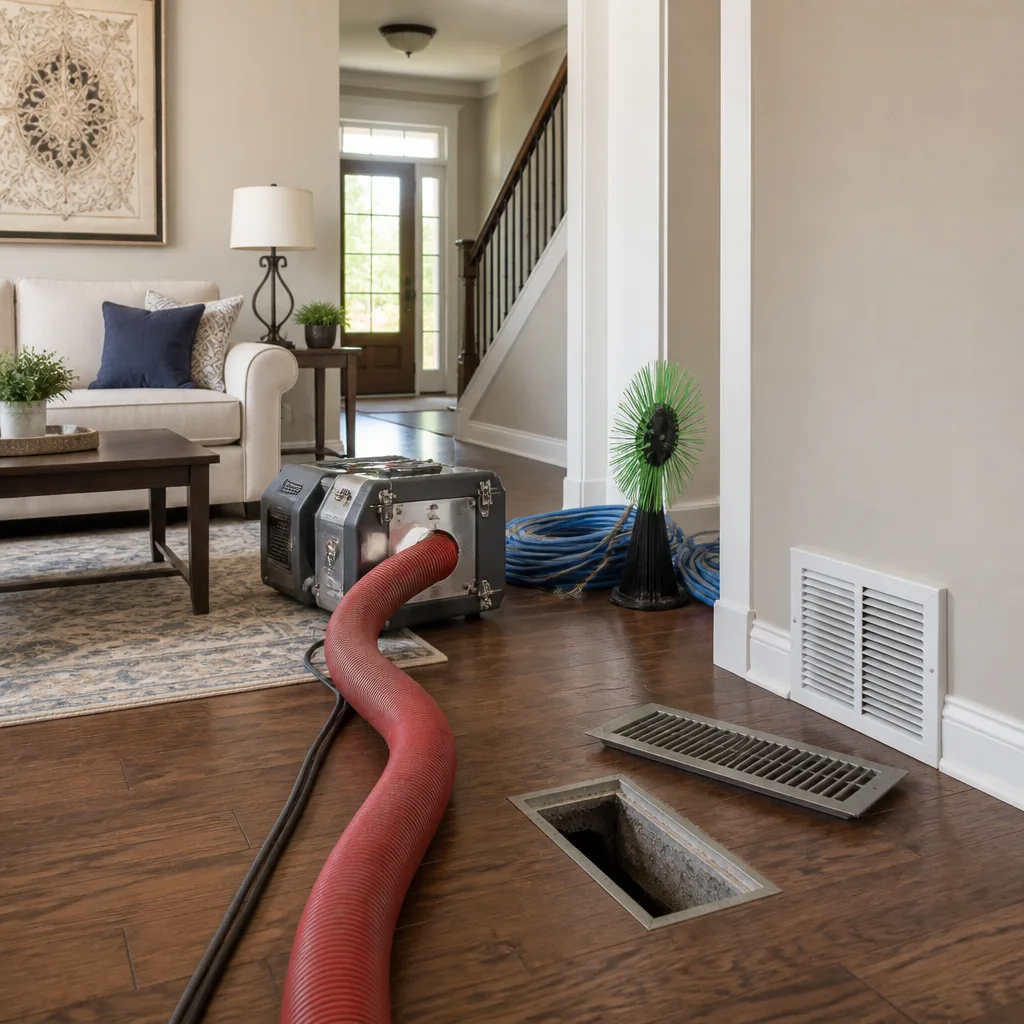 Whole-home duct cleaning
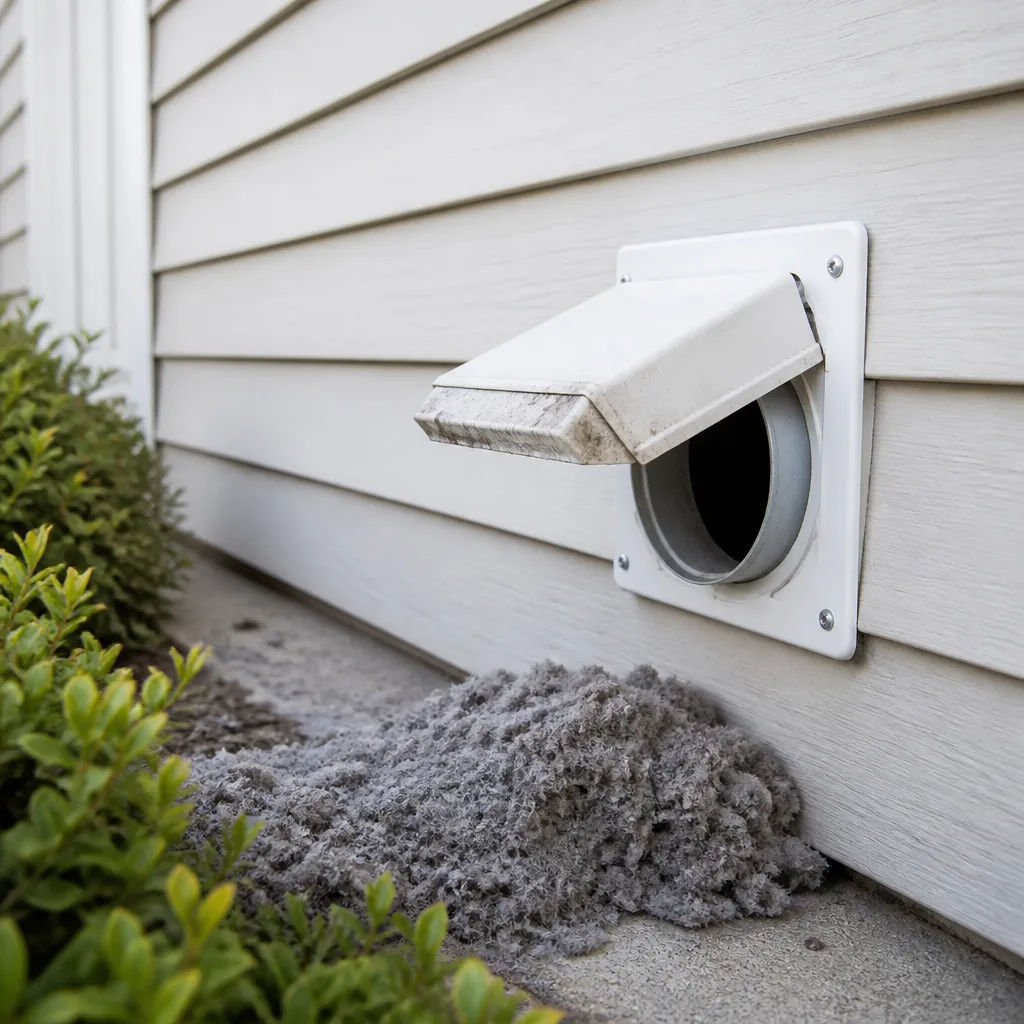 Dryer vent cleaning
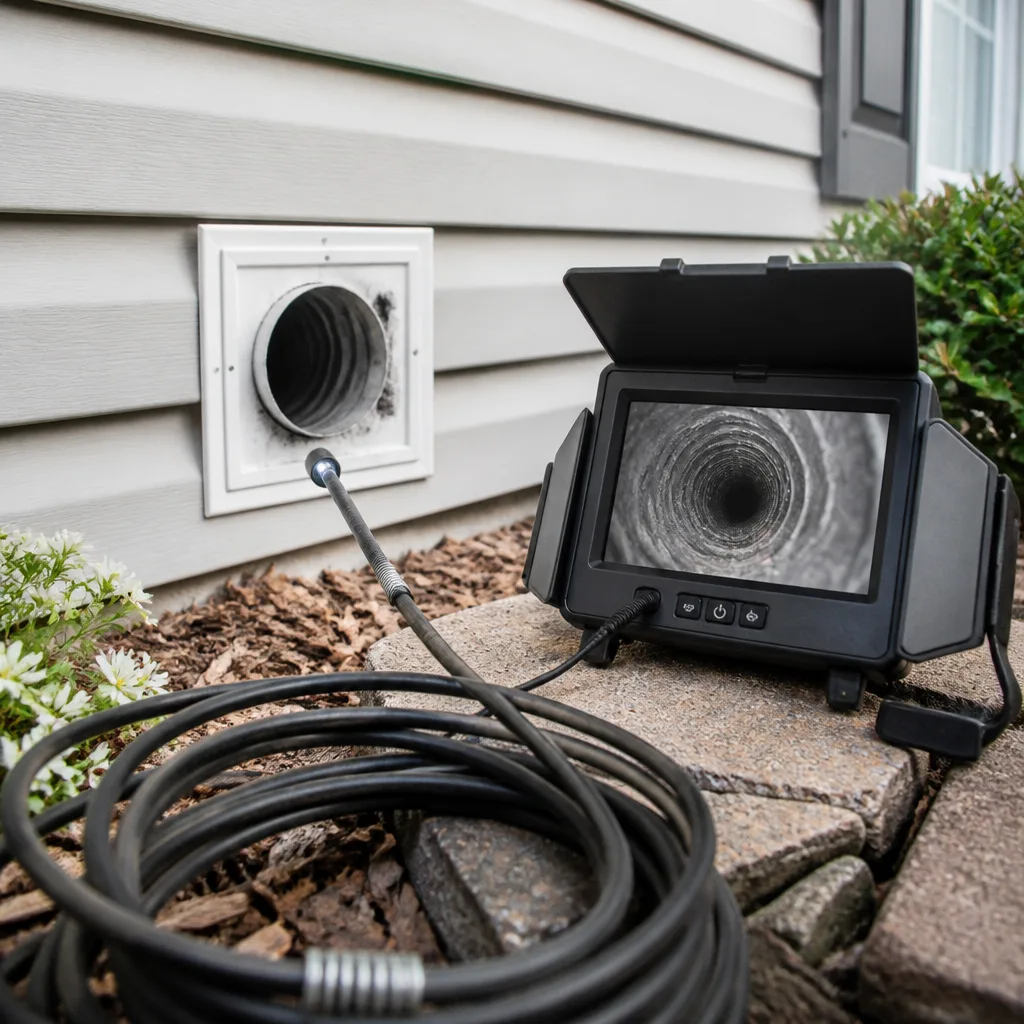 Camera inspection
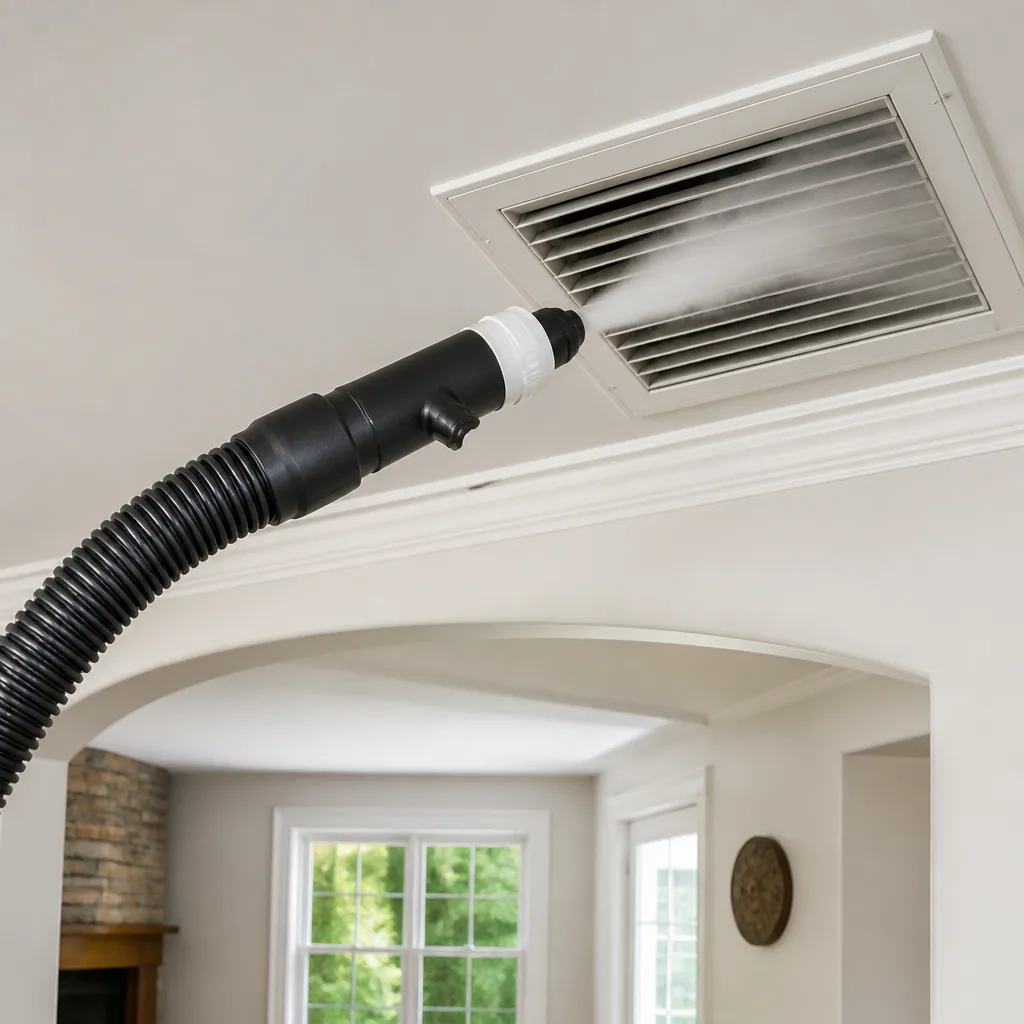 Sanitizing & deodorizing
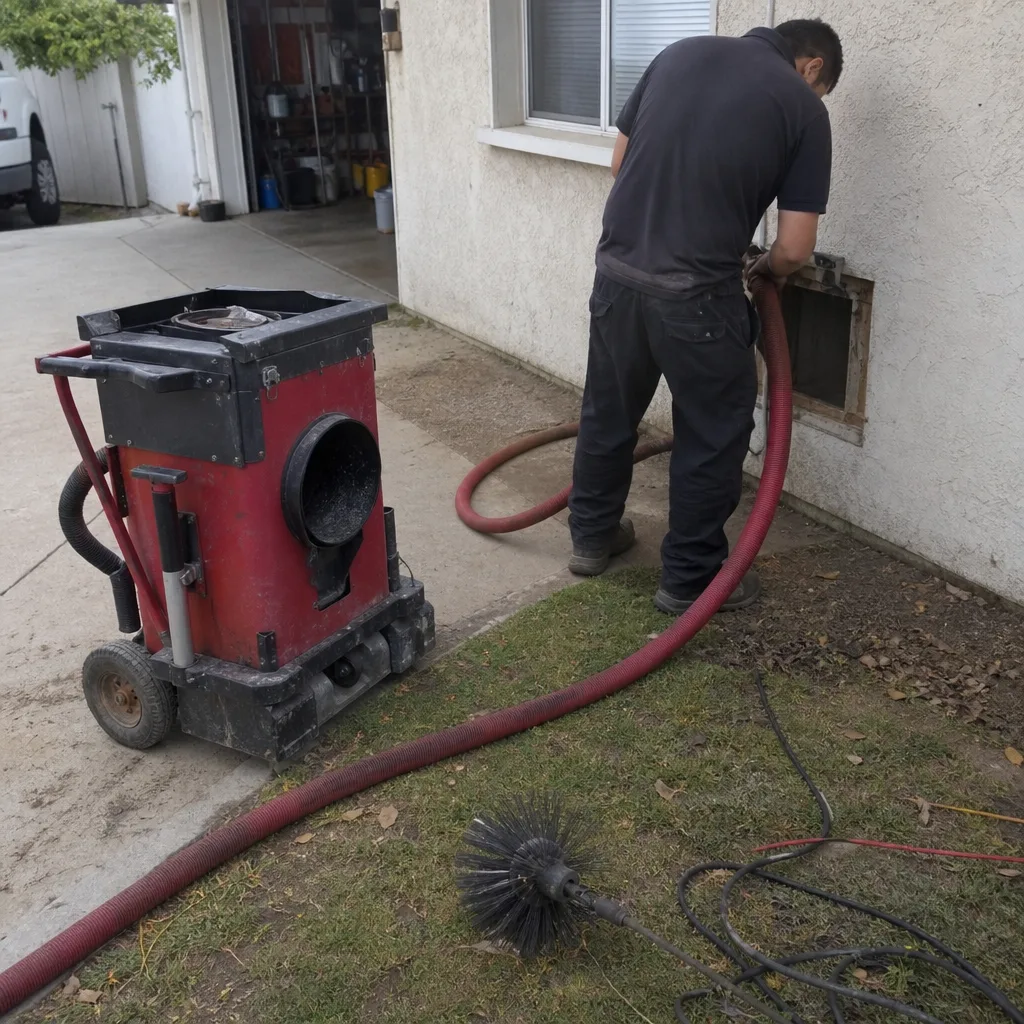
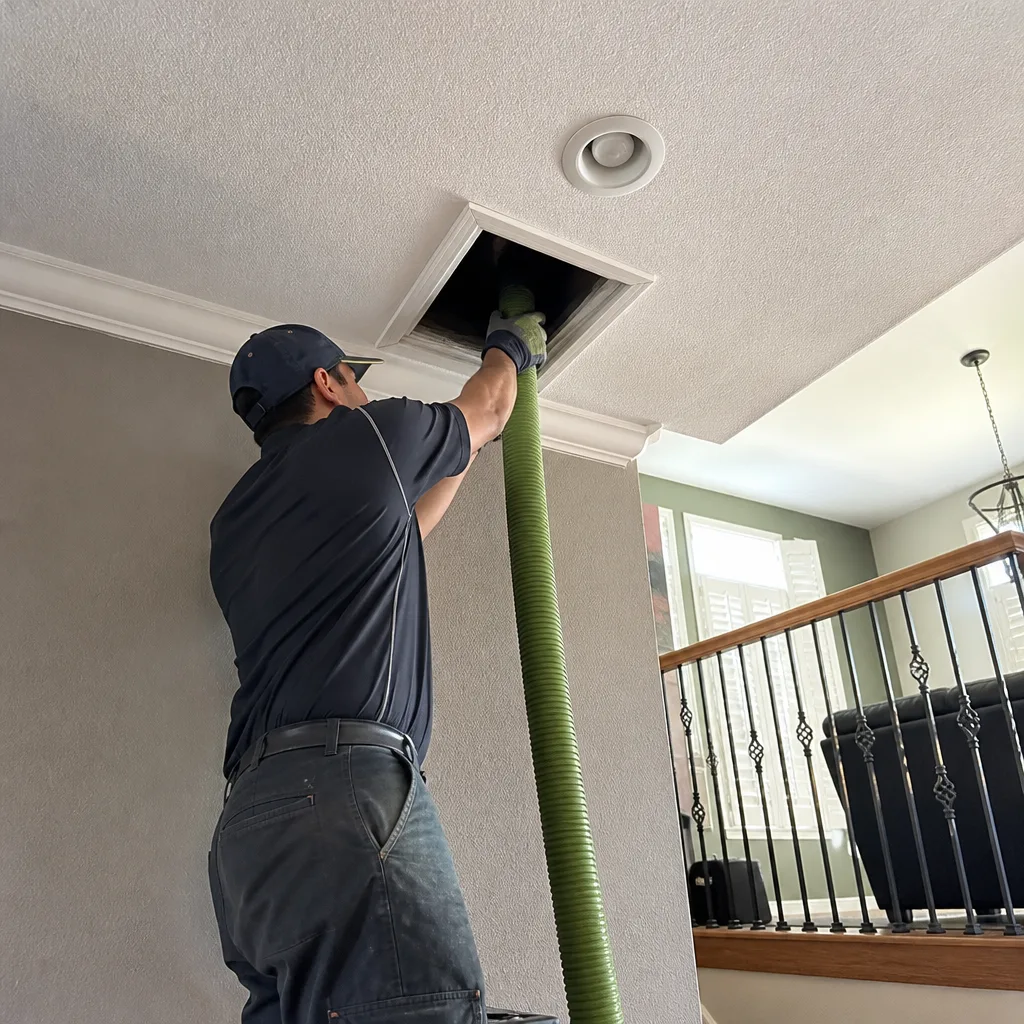
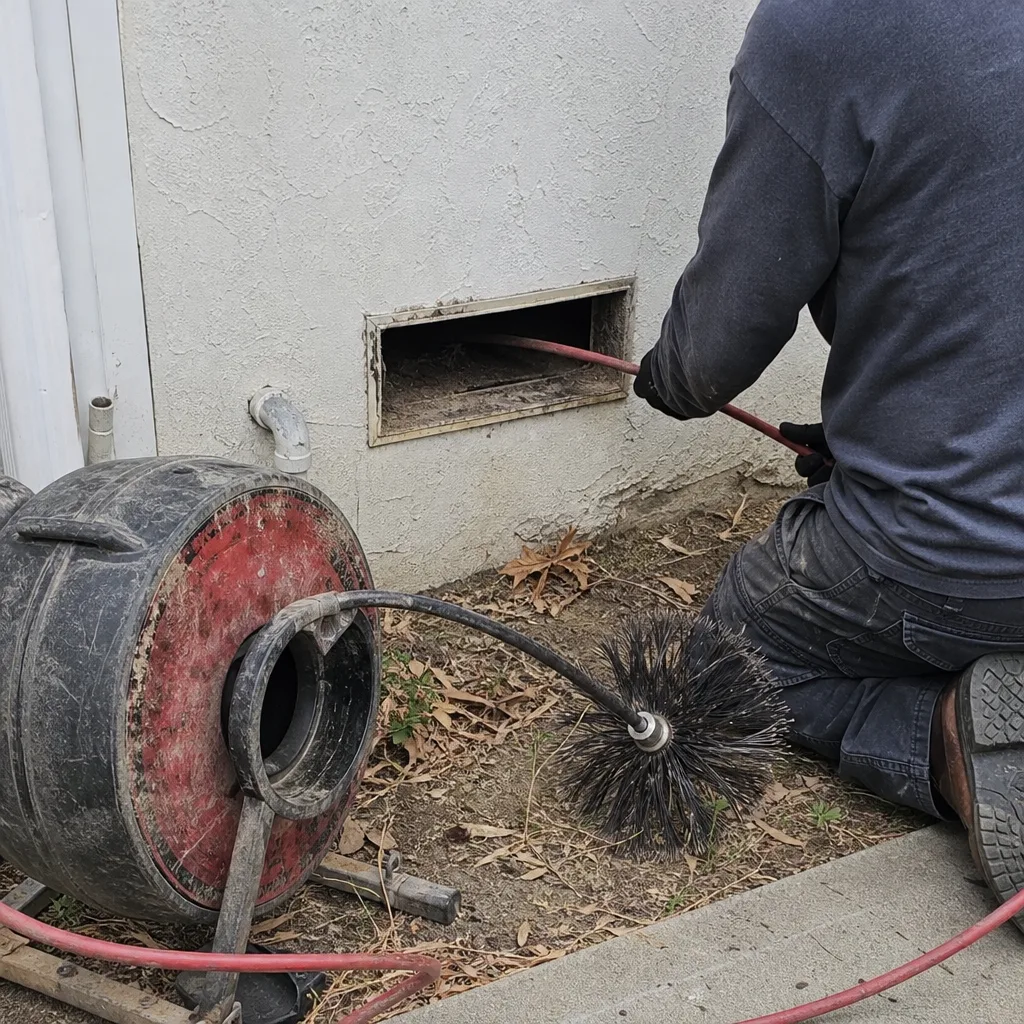
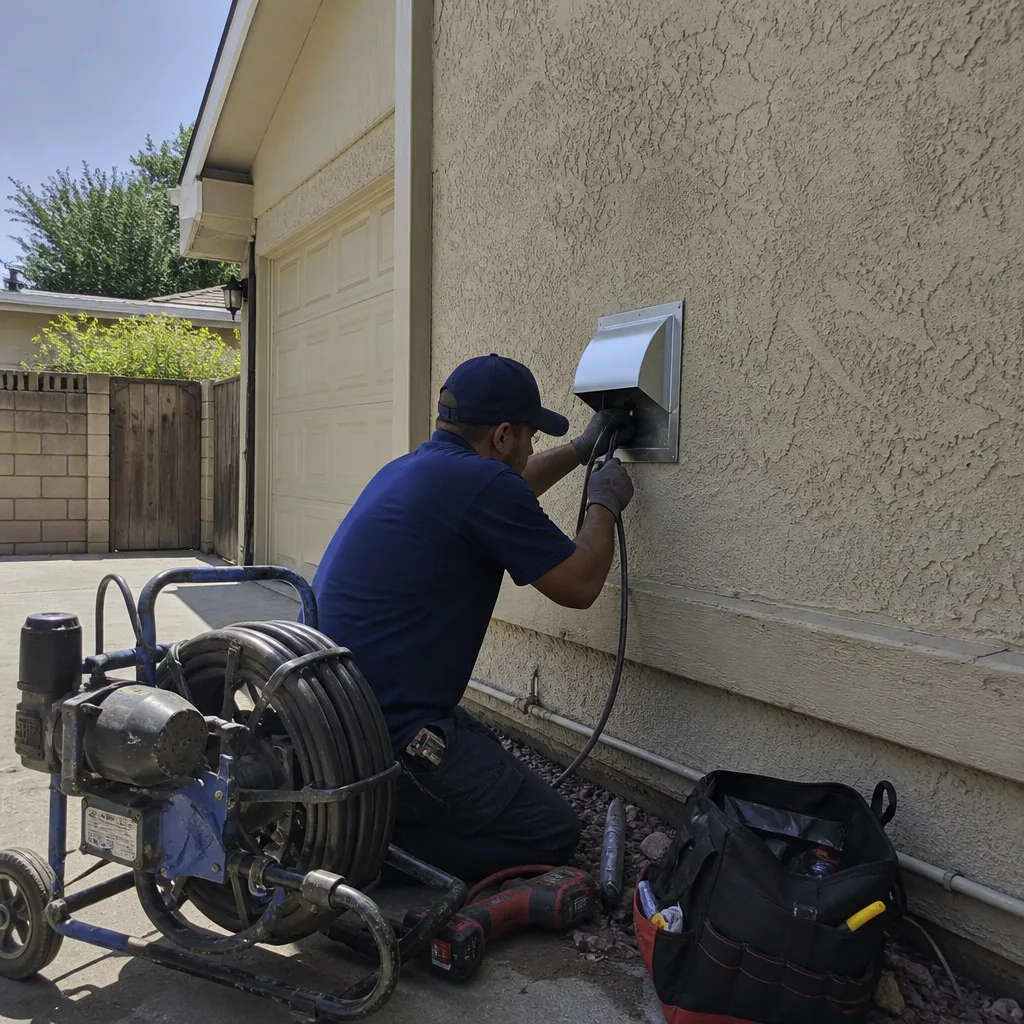
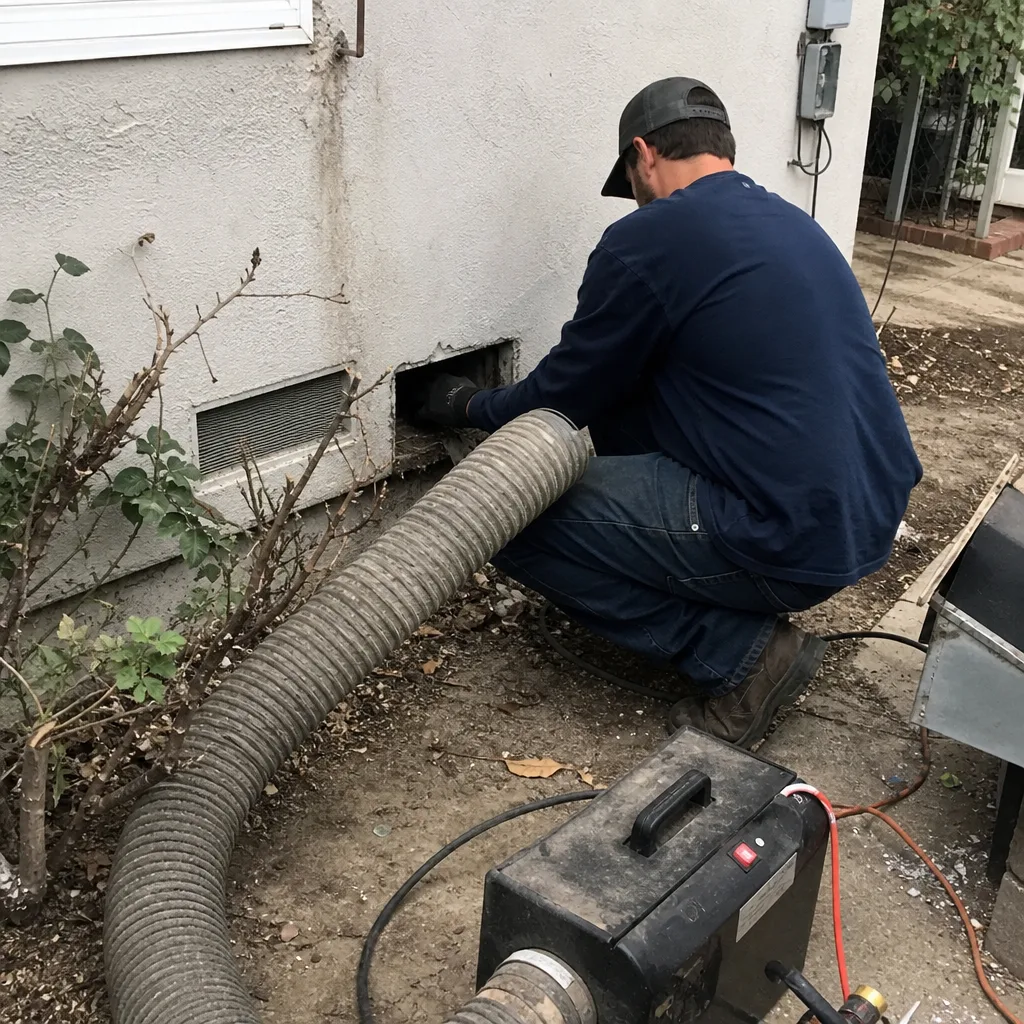
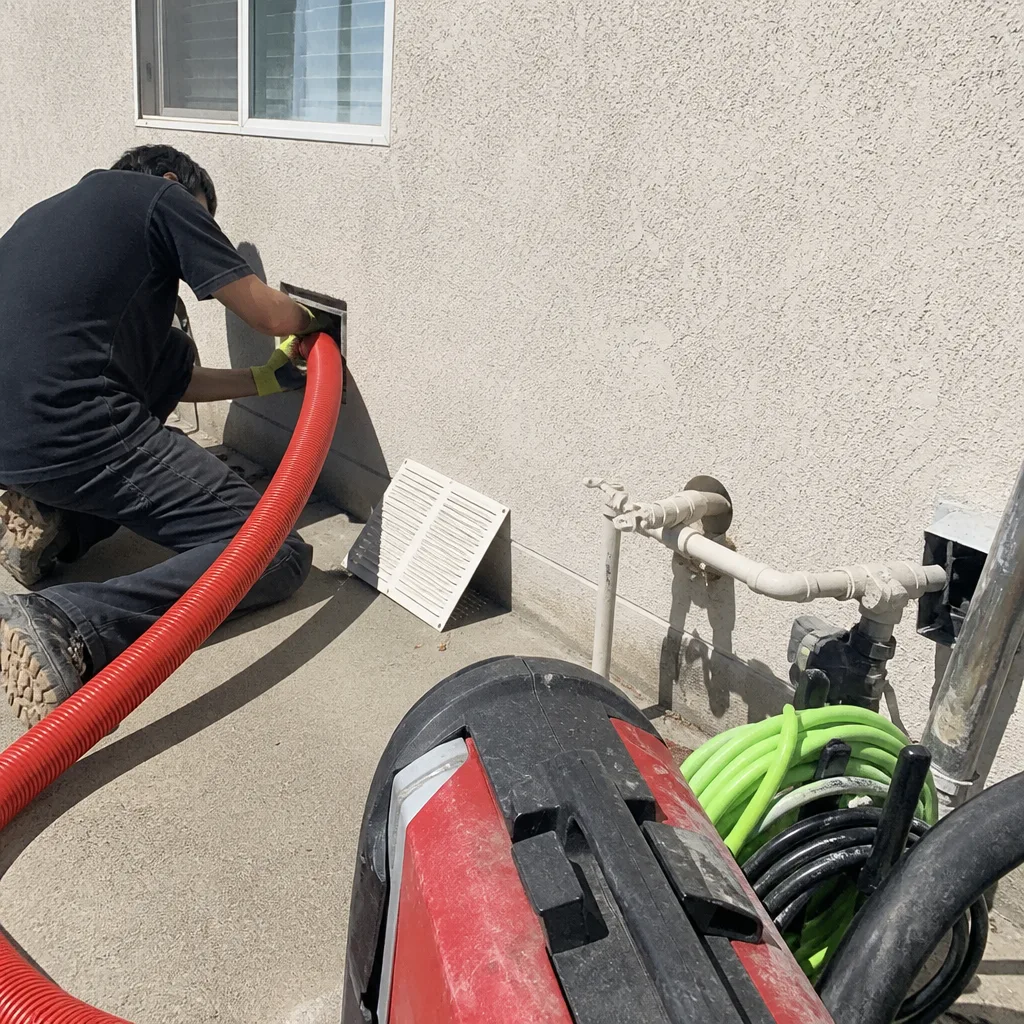
Whole-system duct and dryer vent check with before-and-after photos - you see exactly what came out of your vents
That "$99 whole-house special" is a bait ad - the real number appears once they are in your hallway, or the "clean" is a shop-vac at the register. We photograph the inside of your ducts before and after instead.
Air Duct Cleaning Maintenance Checklist for Valley Hi Homeowners
Changing your filter every 90 days while your ducts carry a quarter-inch of compacted dust on their walls is like cleaning your windshield while your engine runs on old oil. The filter is the last line of defense, not the first. In Valley Hi, where summer temperatures push HVAC systems to run nearly continuously from June through September, the volume of air moving through your ductwork is staggering. A single return grille in a 1,800-square-foot Valley Hi home can pull more than 1,000 cubic feet of air per minute during peak cooling season. That air carries everything from cooking grease to pet dander to fine dust from the nearby foothills, and a portion of it settles inside the duct system every single day. This guide gives you a physically observable maintenance framework, tied to specific system conditions you can check yourself, so you know when routine cleaning is enough and when your ducts are telling you something is wrong.
Quick Answer
An air duct maintenance checklist for Valley Hi homeowners combines monthly observable checks you can do yourself (register airflow feel, return grille inspection with a phone flashlight, and first-startup smell test) with an annual professional assessment. Clean or replace your filter every 30 to 90 days depending on occupancy and pets, log what you observe, and schedule Air Duct Cleaning services every 3 to 5 years for most homes, or every 2 years if you have shedding pets, recent renovation dust, or a smoker in the house. Valley Hi construction dust and wildfire smoke events should trigger an immediate visual inspection regardless of schedule.
Styles & brands we work with
- Whole-home duct cleaning
- Dryer vent cleaning
- Camera inspection
- Sanitizing & deodorizing
Table of Contents
- Monthly Observable Checks You Can Do Yourself
- The Annual Logging System: What to Track and When
- Valley Hi-Specific Triggers That Move Up Your Cleaning Timeline
- What a Contractor Checks That Homeowners Cannot
- Coordinating Duct Maintenance with HVAC Service Visits
- The Filter Framework: Matching Filters to Valley Hi Conditions
- Signs Your Ducts Need Repair, Not Just Cleaning
- Common Mistakes to Avoid
- When to Call a Professional
- Frequently Asked Questions
Monthly Observable Checks You Can Do Yourself
Every homeowner in Valley Hi can perform three specific checks each month without any special tools. These are the same observations we make on professional assessments, simplified for a homeowner’s routine. The point is not to replace a professional evaluation but to catch changes early, before they become expensive problems. The three checks below take less than ten minutes combined and give you a baseline of what “normal” looks like in your system, which matters because every home and every duct system behaves slightly differently. Once you know your system’s normal operating state, deviations become obvious.
1. Register Airflow Balance Test
Walk through your home while the blower is running and hold the back of your hand about two inches from each supply register. Note the relative force of airflow room by room. In a properly balanced Valley Hi system, airflow feels similar across registers serving rooms of comparable size. A room that suddenly feels noticeably weaker, or a register that whistles when the door closes, indicates a restriction somewhere: it could be a partially collapsed duct, a disconnected joint leaking conditioned air into the attic or crawlspace, or a blockage somewhere in the branch line. One weak register is rarely just a dirty filter problem. The filter restricts the whole system equally, not one room. So track which room and which register changes, because that points you toward the specific duct run that needs a professional look.
2. Visual Inspection Through Return Grilles
Most Valley Hi homes have central return grilles, usually in a hallway ceiling or wall. Unscrew or unclip one and shine a phone flashlight down the return boot. What you are looking at is the accumulated history of every particle that ever entered that return. Look for two things: the thickness and texture of the dust layer. A thin, fluffy layer of household dust is normal. A thick, felted, or greasy buildup that resists a gentle touch with a paper towel is not. That kind of coating usually includes cooking oils, candle wax residue, and other sticky compounds that bind dust into a layer regular airflow cannot move. If you see dark discoloration that is not simply dust but looks like soot or staining, you should schedule a professional assessment. Also note any visible debris that should not be there: drywall pieces, insulation fragments, or evidence of rodent activity. Those indicate a structural problem, not a housekeeping one.
3. First-Startup Smell Test
When you switch from heating to cooling in spring, or cooling to heating in fall, the first few cycles often produce a characteristic smell. A slight, brief “musty” smell that fades within a few minutes is usually moisture that condensed on the coil and mixed with accumulated dust. If the smell persists beyond the first day, or if it smells like burning dust, mildew, or something sour, you are smelling the accumulated contents of the ductwork cooking or reactivating. In Valley Hi, the swing between dry heat and winter dampness creates condensation cycles inside ducts even when the system is dormant. Persistent smell after seasonal startup is a reliable indicator that moisture and organic matter have accumulated somewhere in the system. Address it before running the system continuously, because continued circulation will embed that odor into dust layers and make it harder to eliminate.
The Annual Logging System: What to Track and When
Most maintenance advice tells you to change your filter every 90 days, but almost no one tells you to write anything down. That is a mistake. Duct condition changes slowly, and your memory of what the return looked like last March is unreliable. A simple annual log gives you a real diagnostic history, and it takes about five minutes per entry. We recommend a dedicated note on your phone or a page in a home maintenance binder. The log becomes the single most useful tool for deciding when professional air duct cleaning in Valley Hi is actually warranted, rather than guessing based on marketing calendars.
Here is what to log, and when:
- Every filter change: Date, filter type, MERV rating, and a one-line note on the filter’s appearance. Was it gray, brown, greasy, wet? A series of “greasy” notes tells you cooking exhaust is being pulled through returns and will eventually require professional coil and duct attention.
- Every HVAC tune-up: Log the technician’s static pressure reading if they take one (ask them to). Record any notes they make about coil condition or blower wheel buildup. These are direct indicators of duct and system cleanliness upstream of the filter.
- Every smoke or wildfire event: Record date and approximate smoke density in Valley Hi. Wildfire smoke particles are fine enough to pass through many filters and deposit inside ducts. Multiple logged smoke events are a legitimate reason to move cleaning up by a year or more.
- Every renovation or construction project: Even a single-room remodel introduces drywall dust, sawdust, and other fine particulates that settle in ducts and stay there.
- Every time the home floods or a crawlspace gets water: Crawlspace ducts in Valley Hi homes with pier foundations can wick moisture, and wet duct insulation degrades. Log any plumbing leak, exterior grading issue, or flooding event.
One-year rhythm for Valley Hi homeowners:
- January: Replace filter. Conduct the three monthly observable checks. Note any heating-season odors.
- March: Pre-cooling season check. Clean return grilles and supply registers with a vacuum and damp cloth. Replace filter if needed.
- June: First month of heavy cooling. Do the smell test on first startup. Log any new sounds or airflow changes.
- September: Post-summer inspection. Look for visible dust accumulation on supply registers. Filter likely needs replacement after peak season.
- October: Pre-heating season check. Smell test at startup. Consider scheduling professional assessment before the heating season if any issues appeared in the log.
- December: Mid-heating season filter change. Note any burning dust smell on first heating cycles and whether it resolved.
Valley Hi-Specific Triggers That Move Up Your Cleaning Timeline
Valley Hi has characteristics that make its duct systems behave differently from coastal California or the Bay Area. The combination of hot, dry summers, valley inversions, occasional wildfire smoke, and ongoing infill development means your cleaning schedule should be responsive to events, not just calendar months. Here are the Valley Hi conditions we tell homeowners to watch for.
Nearby grading and construction. Valley Hi has seen steady infill development, and earthmoving creates fine particulate that travels for blocks. If you have active construction within two or three blocks, check your return grilles monthly regardless of your normal schedule. Construction dust is sharp and abrasive. It embeds in duct walls, and it can accelerate wear on the blower motor bearings as it passes through the system. Homes downwind of a grading site often show measurable accumulation within a single season.
Flooding events and crawlspace moisture. Many Valley Hi homes built in the 1970s and 1980s have pier-and-beam foundations with ducts running through crawlspaces. When heavy rain saturates the soil, or when drainage around the foundation fails, moisture migrates into the crawlspace. Duct insulation exposed to that moisture can stay damp for months, and damp insulation grows biological material that the blower then circulates. You may not see the crawlspace, but you may notice a persistent musty smell that resists cleaning. That smell is often the duct insulation, not the air. This is also where air duct repair in Valley Hi becomes relevant: saturated insulation needs replacement, not just cleaning.
Wildfire smoke season. Valley Hi sits in a region where wildfire smoke from foothill and Sierra fires can linger for days or weeks. Smoke particles are extremely fine, often under 2.5 microns, which passes through standard fiberglass filters. Those particles settle on duct walls and coil surfaces. After a significant smoke event, even one that did not require evacuation, do a visual check of your return. If you see gray or brown staining on the filter media beyond normal household dust, assume the ducts took on some fraction of that load too. A professional assessment after a heavy smoke season is a reasonable, defensible maintenance decision, not an upsell.
HVAC system replacement. This is the trigger most homeowners miss. When you replace your furnace or air handler, the existing ducts remain. Every new system is sized to a specific static pressure and airflow requirement. Old ducts carrying years of compacted buildup now restrict airflow for a brand-new blower motor, reducing the efficiency you just paid for. If you are replacing HVAC equipment in Valley Hi, have the ducts professionally cleaned before or immediately after the installation. The same logic applies to new homes: freshly built homes often have construction debris inside ducts, including drywall offcuts, fasteners, and insulation fragments. New does not mean clean.
What a Contractor Checks That Homeowners Cannot
Some duct conditions are invisible from the living space, and the diagnostic tools required are not available at a hardware store. Understanding what a professional assessment covers helps you know when DIY observation has reached its limit. We use the following checks as part of every assessment, because they separate a real duct cleaning service from a surface-level vacuuming.
Duct Static Pressure
Static pressure measures the resistance to airflow through the entire duct system, including the coil, filter, and ductwork. High static pressure means the blower is working harder than designed to push air, which wastes energy and shortens blower motor life. A common cause of high static pressure is duct restriction, either from accumulated debris or from undersized or damaged duct runs. Normal static pressure for most Valley Hi residential systems falls between 0.3 and 0.6 inches of water column. Readings above 0.8 indicate a problem worth investigating. Homeowners cannot measure this without a manometer, but they can ask their HVAC technician for the reading during any tune-up.
Joint Integrity and Air Leakage
Duct joints are the seams where duct sections connect, and in older Valley Hi homes, they were often sealed with nothing more than duct tape, which degrades and falls off over the decades. Every leaking joint pulls attic or crawlspace air into the system or pushes conditioned air out. During an assessment, we check accessible joints for separation, disconnected sections, and failed seals. A homeowner might sense the symptom (a room that never reaches temperature) but cannot see the joint without access to the attic or crawlspace. Leaking joints are also how rodent droppings, insulation fibers, and crawlspace dust enter the airflow stream.
Insulation Condition Inside the System
Duct insulation serves two functions: thermal performance and acoustic damping. When that insulation gets wet, compressed, or chewed on by rodents, it degrades. Compromised insulation near the end of a duct run can also become a source of particles entering the air stream. In crawlspace systems common to older Valley Hi subdivisions, insulation damage is one of the most common structural findings, and it requires repair or replacement, not cleaning. This is part of why we treat duct cleaning and duct repair as connected services: cleaning a damaged duct is only half the job.
Coordinating Duct Maintenance with HVAC Service Visits
Duct maintenance and HVAC service are usually scheduled as if they are unrelated events, which doubles the disruption and halves the benefit. The smarter approach is to put them on the same calendar cycle. A tune-up that checks the blower, coil, and refrigerant levels tells you about the equipment. A duct assessment tells you about the delivery system. Done separately, each misses the other’s context.
Here is a coordination framework that works for Valley Hi homeowners:
- Schedule your HVAC tune-up first. Ask the technician for the static pressure reading, coil condition, and blower wheel inspection. Write all of it in your maintenance log.
- If static pressure is high or the coil is dirty, schedule a duct assessment within 30 days. There is no point cleaning the coil while dirty ducts will just recontaminate it, and no point cleaning ducts if the real problem is a clogged coil.
- If you are planning duct cleaning, do it before the HVAC tune-up rather than after, or on the same day if the provider coordinates. Cleaning ducts after a tune-up means the coil and blower are dirty again within weeks.
- For dryer vents, coordinate with the cooling season. Valley Hi summer heat means dryers run hotter, and lint-fill risks increase. A spring dryer vent cleaning in Valley Hi pairs naturally with a pre-cooling season HVAC check, and both serve the same goal: unrestricted airflow when temperatures peak.
The practical result: two service visits on the same date, one point of disruption, and a complete picture of your system from return grille to supply register. This is the kind of coordination that separates a reactive homeowner from a proactive one.
The Filter Framework: Matching Filters to Valley Hi Conditions
Filter selection is the single most misunderstood part of home airflow maintenance. Most homeowners believe a higher MERV rating is always better, and most filter marketing encourages that belief. The reality is more complicated, and understanding it will change how you approach duct maintenance. For context: MERV stands for Minimum Efficiency Reporting Value, and it measures a filter’s ability to capture particles of specific sizes. A MERV 4 catches large dust and fibers. A MERV 8 catches finer household dust. A MERV 11 and above starts catching particles in the smoke, pollen, and fine-particulate range.
The trade-off is airflow. Higher MERV filters are more restrictive, and every system has a maximum static pressure it can handle before efficiency drops and components strain. Many residential blowers in Valley Hi homes were designed for MERV 6 to MERV 8 filters. Installing a MERV 13, unless the system was designed for it, can increase static pressure enough to reduce airflow by 15 percent or more, which means the blower works harder to move less air. That is a net negative for both comfort and equipment longevity. We have seen this repeatedly in Valley Hi: homeowners chase air quality with restrictive filters, then wonder why rooms feel stuffy in August and why the blower failed early.
The right filter framework starts with the question: what is the actual problem you are solving? Household dust is handled by MERV 8. Pet dander, MERV 8 to 11. Smoke events, MERV 11, installed temporarily during the smoke and removed after it clears. If you have specific health needs, filtration products from brands like Honeywell and Aprilaire can be matched to your system’s airflow capacity, but that is a conversation based on static pressure measurements, not marketing brochures. For most Valley Hi homes, the practical answer is: MERV 8, changed every 30 to 60 days during peak summer and every 60 to 90 days the rest of the year, more often with shedding pets. And a log entry every time.
The filter is the last line of defense, not the first. It protects the blower and coil from the air being pulled through the return. The air that actually reaches your living space is filtered only as well as the filter’s seal, the filter’s rating, and the cleanliness of the duct surfaces downstream. A MERV 8 filter in a clean system delivers better air quality than a MERV 13 filter in a system with a quarter-inch of accumulated dust on every interior surface.
Signs Your Ducts Need Repair, Not Just Cleaning
Cleaning fixes one problem: accumulated debris inside otherwise sound ductwork. It cannot fix holes, disconnected joints, collapsed sections, or degraded insulation. In our experience in Valley Hi, a meaningful percentage of homes that call for cleaning actually need repair, either instead of or in addition to cleaning. Here is how to tell the difference before you spend money on the wrong service.
Rooms that never reach temperature, no matter the season. A disconnected duct in the attic or crawlspace dumps conditioned air into a space you are not trying to condition. The symptom is a bedroom that is always ten degrees off from the rest of the house. Cleaning cannot reconnect a separated duct. The fix is structural, and in many cases, the separated section has also been collecting contaminated attic or crawlspace air for months.
Visible duct collapse or sagging in accessible areas. If you can see flexible duct runs in a garage, attic, or crawlspace, look for sections that are crushed, kinked, or sagging enough to create a hard bend. Flex duct is designed to run with gentle arcs, not 90-degree kinks, and years of gravity plus heat can cause permanent deformation. A crushed duct restricts airflow at that point, and no amount of cleaning will restore it. This is a repair situation, and it often requires replacing the damaged section.
Evidence of rodent activity in or around ducts. Rodent droppings near registers, scratching sounds from the ceiling or crawlspace, or actual sightings of rodents in the house are serious. Rodents chew through flex duct, nest in insulation, and contaminate the air stream with droppings and urine. This is a health and structural issue. The ducts need repair, and the rodent entry points need to be sealed. Cleaning alone will not prevent recurrence, and cleaning rodent-contaminated ducts without repairing the breach simply means the next rodent will undo the work.
Water staining or rust on accessible metal duct. This is most visible in basements or crawlspaces with exposed sheet-metal ducts. Rust and water staining indicate condensation or leaks, and the source could be a plumbing leak above, a crawlspace moisture problem, or condensation from improperly insulated ducts carrying cold air through a hot crawlspace. Rusting ducts will eventually fail structurally. The source of the moisture must be fixed, and damaged sections replaced.
We provide air duct repair in Valley Hi for exactly these situations, and we routinely identify repair needs during cleaning assessments. The point is that cleaning and repair are different jobs, and pursuing one when the other is needed wastes money either way.
Common Mistakes to Avoid
- Replacing the filter more often instead of cleaning the ducts. The filter restrictions grows faster when ducts are dirty because debris from the ducts recirculates onto the back of the filter. A dirty system clogs filters prematurely, and the answer is not another filter change.
- Using the highest-MERV filter you can find. This is the most common self-inflicted airflow problem in Valley Hi. Restrictive filters increase static pressure, reduce airflow, and strain blower motors. Match the filter to the system, not to the marketing.
- Cleaning only the registers you can see. Supply registers are the exit points, not the system. Wiping register faces does nothing for the duct interiors, and it provides a false sense of accomplishment.
- Ignoring the dryer vent until the dryer stops drying. A restricted dryer vent shows its worst symptoms late. Lint accumulates over years, and by the time drying times double, the vent is far past the point where cleaning is easy. Dryer vent cleaning is fire prevention, not an optional extra.
- Assuming new construction means clean ducts. We routinely find drywall dust, paint overspray, plastic wrapping, and even soda cans inside ducts of homes built in the last five years. Builders do not clean ducts before handover.
- Waiting for a smell to become permanent before investigating. Occasional musty odor at startup that resolves is a symptom, not a non-event. It means moisture is present somewhere. Ignore it long enough and the biological growth becomes embedded, and cleaning becomes harder.
- Accepting a $49 whole-house duct cleaning offer. A price that low does not cover the cost of running professional equipment, paying trained technicians, or doing the job properly. What it covers is a sales visit. Legitimate professional cleaning in Valley Hi costs real money because it takes real time and real equipment.
When to Call a Professional
Every homeowner can do the monthly observable checks in this guide, but certain findings should trigger a professional call without delay. Persistent musty odor that survives a filter change, visible mold or biological growth on any register or return, airflow changes you can feel, rodent evidence anywhere in the system, or a filter that turns gray or greasy within ten days of installation. If your maintenance log shows repeated smoke exposure, renovation dust, or moisture events, you should schedule an assessment even if nothing feels wrong. None of these conditions improve on their own. Call us at (833) 399-2759 for a free estimate, and we will be honest about whether you need cleaning, repair, or simply a different filter. For related reading, explore our more guides & resources.
Frequently Asked Questions
Most Valley Hi homes need professional air duct cleaning every 3 to 5 years, with the timeline shortening to 2 years for homes with shedding pets, smokers, recent renovation work, or repeated wildfire smoke exposure. The schedule should respond to observed conditions, not just calendar months, so use the observable checks in this guide as your primary decision tool. For regulatory context, read our guide to Air Duct Cleaning Permits, Codes & Inspections in CA: What You Need to Know. Call (833) 399-2759 if you are unsure whether your home is due.
Professional air duct cleaning in Valley Hi typically runs from $350 to $750 for a whole-home system, depending on home size, number of returns, and the degree of buildup. Homes with severe rodent contamination, water-damaged insulation, or other structural issues will run higher because repair enters the picture. One flat price per system agreed before work starts is standard practice among legitimate providers; if a quote is per-vent or under $100, treat it as a sales opener, not a service.
No. A shop vac cannot generate the negative pressure or reach the full length of a duct run, and without professional containment, you will loosen debris you then cannot capture, releasing it into your living space. Professional systems from Rotobrush and Nikro are built specifically for this job, and Abatement Technologies negative-air containment keeps what comes out of your ducts from recirculating through your home. The equipment matters because the physics of the job are unforgiving.
Ask for before-and-after photos of the duct interiors, specifically of the return boot, the supply trunk, and one representative branch line. Legitimate providers document their work with remote camera footage. You can also perform your own post-service check: within a week of cleaning, shine a flashlight into the same returns you inspected before the service. The difference should be obvious. If the access points were sealed properly with no debris scattered around the registers, that is a good sign the team worked with containment.
Only if the airflow problem is caused by debris restriction, which is sometimes but not always the case. A disconnected duct, crushed flex line, or undersized run will not be fixed by cleaning. A professional assessment should measure static pressure and check joint integrity to determine whether cleaning alone will solve the problem. In older Valley Hi homes with original flex duct from the 1970s and 1980s, airflow problems are frequently structural, not just dirty.
Yes, and many Valley Hi homeowners combine the two services in one visit. Dryer vent cleaning is a separate procedure using specialized equipment, but the logic of doing them together is straightforward: both systems benefit from unrestricted airflow, both accumulate lint and dust over years, and coordinating the work saves you a second service visit. Lint-clogged dryer vents are a documented fire cause, so treat this as safety maintenance, not an add-on.
The Bottom Line
An air duct maintenance checklist is a diagnostic framework, not a list of chores. The filter is your last line of defense, the return grille is your early-warning window, and your maintenance log is the memory your system deserves. Valley Hi conditions, from summer heat to construction dust to wildfire smoke, accelerate what accumulates inside ducts, and the only reliable way to know when cleaning is due is to look, log, and respond. Do the monthly visible checks. Track the annual triggers. Call a professional when the system tells you something is wrong, not when the calendar says three years have passed. And when you do, make sure the company arriving with the equipment is the kind that brings professional-grade tools, not a shop vac with a logo on it.
Written by the team at Air Duct Cleaning Valley Hi, serving Valley Hi since 2018.
See the difference
 Before
 After
 Before
 After
 Before
 After